CEMS
Published over 4 years ago. See the latest and most current information on CEMS.
The UK’s Environment Agency (EA) have requested that Energy from Waste (EfW) plant operators should report Pollution Inventory (PI) emissions which now includes biogenic CO2 sources. The EA is keen to improve the quality of data on greenhouse gas emissions within the EfW sector.
In January 2021, the EA requested that all operational EfW plants that burn municipal solid waste (MSW) should calibrate their CO2 and N2O Continuous Emission Monitoring Systems (CEMS) plus flow meters. This request was on a voluntary basis, pending this becoming a mandatory requirement in the future. For some operators, this meant adding these gases to the EN14181 reporting schedule and upgrading to MCERTS accredited flow probes.
This year, the EA have made an addition to the Pollution Inventory (PI). They would like all MSW EfW plants to report CO2 from biogenic sources.
Along with CO2 and N2O, the EA would now like to promote a standard way of reporting biogenic CO2 emissions in the PI. The standard procedure will improve the quality of data provided, which will in turn help determine their accuracy.
To calculate the fraction of biogenic CO2, there are a handful of methods to choose from. Some are based on judgement and estimations. By using the ratio obtained from the continuous C14 sampling method, and the total CO2 emitted by the plant, the amount of CO2 from biogenic sources can be calculated. As a result, this method will return the most accurate figures for reporting biogenic CO2 emissions.
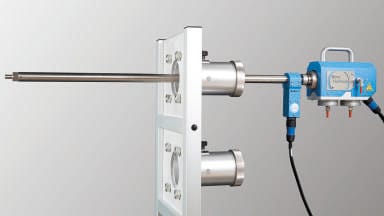
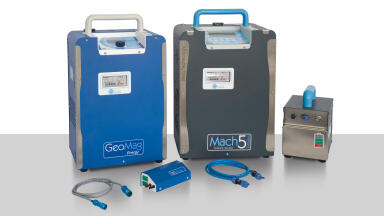
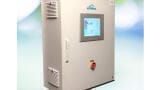
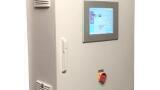
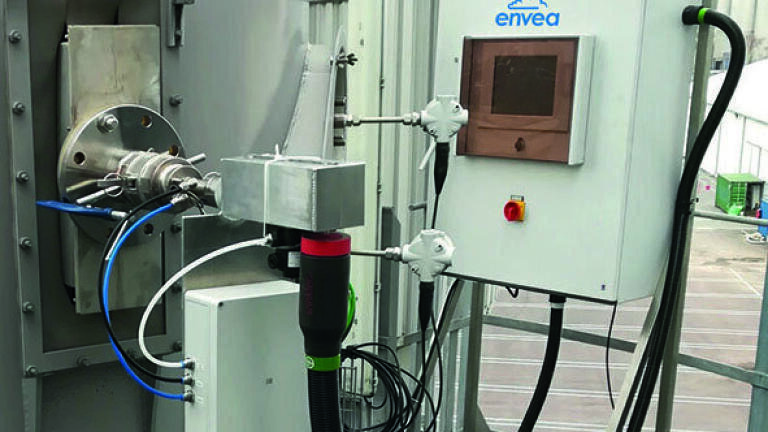
To enable EfW plants to comply with the EA’s request and upcoming legislation a1-cbiss offer the AMESA-B – Continuous Monitoring Sampler. This device determines the fractions of biogenic CO2 to fossil CO2 and uses the recognised C14 sampling method. The sampling principle fulfils the requirements of EN ISO 13833 and yields the most accurate figures for reporting PI biogenic CO2 emissions. The AMESA B also enables sites to report biogenic CO2 data to Ofgem for financial reward.
IET Guide 2026

 Product directory














.jpg)