Gas sensors
Published over 7 years ago. See the latest and most current information on Gas sensors.
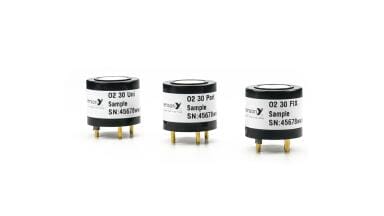
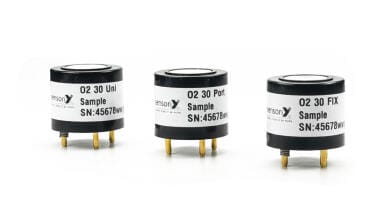
Recognised as a leading supplier of advanced gas and fluid sensor technology, SST Sensing Ltd offers a comprehensive range of oxygen measurement sensor solutions. Complementing the company’s high-performance zirconium dioxide product offering, the LuminOx family uses proprietary solid-state technology to deliver sensors with the cost effectiveness found in legacy electrochemical oxygen sensors, but with a series of key additional benefits.
The optically-based, factory calibrated LuminOx sensors rely on fluorescence quenching by oxygen. Pulsed light is directed onto an oxygen-sensitive fluorescent dye causing it to fluoresce. The rate at which this fluorescence decays is inversely proportional to the amount of oxygen present in the vicinity.
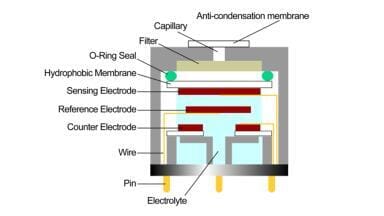
Oxygen detection has historically relied on conventional oxygen sensors such as electrochemical measurement mechanisms which rely on an electrolyte which is consumed over a short period of time. Typical feedback on the lifetime customers get from an electrochemical sensor tends to be around 2 years before needing replacing. This type of technology is a self-degrading, galvanic cell that operates like a metal/air battery. They are constantly depleting in the presence of oxygen and lifetime is generally restricted by the liquid electrolyte and consumable lead anode.
A key advantage to the LuminOx sensor family is that the technology has no lead components and exposure to oxygen does not deplete the fluorescent dye. The LuminOx oxygen sensors can be installed in applications for a much longer period of time than competing oxygen sensors in this price bracket. The stated lifetime for these sensors is 5 years.
LuminOx has minimal cross sensitivity with other gases as luminescence quenching by oxygen is highly selective. Electrochemical sensors generally come with a list of cross-sensitive gases.
Electrochemical sensors are sensitive to temperature and therefore require external compensation, using hardware or software methods. LuminOx is fully compensated for temperature and barometric pressure. Not only does LuminOx measure and compensate for temperature, but its RS232 serial communication interface allows the gas temperature and pressure to be measured and transmitted along with the oxygen value – an added bonus.
The LuminOx oxygen sensor family is used in various applications, in the medical, industrial and transportation markets. The measuring tasks fall into three main categories. Controlling of low oxygen levels, maintaining ambient oxygen levels and prevention of oxygen depletion. Typical applications for these sensors include: ambient air monitoring, controlled atmosphere/storage of perishable goods, biogas monitoring, oxygen depletion alarm/area monitoring, altitude training rooms and portable/remote datalogging
A common application for SST’s LuminOx sensors is within the medical market for live cell microscopy in hypoxic environments. LuminOx is successfully being used in IVF incubators to monitor lower oxygen levels which assists in increasing the number of successful embryo fertilisations.
Keeping perishables fresh and ripe during transportation is a challenge. The LuminOx sensors are currently used in storage containers that ship perishables from one end of the globe to the other. The sensors ensure the oxygen and temperature levels are maintained at a low level to assist in preventing the ripening of goods during transportation. This process maintains the quality, look and taste of the fruit for it arriving at its final destination.
“The LuminOx family is significantly more resilient to environmental effects than electrochemical oxygen sensors, with the ability to deal with wider operating temperatures, as well as rapid changes in pressure,” states Paddy Shannon, SST Sensing’s Technical Director. “As a result, they provide the market with a much more stable oxygen sensing solution that combines low cost, minimal power consumption and simple installation with longer life and full RoHS compliance from the outset.”
IET 36.5 Sept/Oct 2026


 Product directory




.jpg)