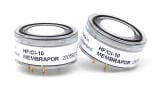
Membrapor (Switzerland) has successively lowered the Cross-sensitivity of its H2S-sensors. The type H2S/C-50 for measurements in the range of 0 – 50 ppm H2S exhibits an interference to CO of only 0.4%, which is an unbeatable figure. The product line has now been developed for concentrations of up to 5`000 ppm of Hydrogen sulphide.
Also with the Hydrogen sensor H2/CA-1000 the cross-sensitivity to CO could have been lowered further and is now as low as just 1%.
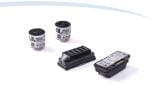
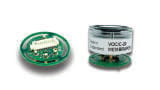
A shortening of the response time has been achieved with the SO2-sensors. They show now a t90 The housing of the Compact-size has been redesigned to offer the robustness and durability required for industrial applications. It allows for a Compact sensor to be easily mounted on an exhaust pipe ensuring full functionality.
The favoured HCl-sensor in the Compact-housing is now available with a measurement range of 0 to 200 ppm. For the same concentration range the new ozone sensor O3/C-200 has been introduced. In the Miniature-housing, a two-electrode variation of the ammonia sensor has also been released.
Due to continuous efforts in development at the research centre in Zürich a product range of sensors for 16 gases has been successfully established. Membrapor has further extended its market position as independent sensor producer for toxic gases.
All of the more than a hundred different sensors are produced in Switzerland and supplied to the world`s gas detector manufacturers for flue gas analysers, personal safety monitors, fixed-point detection systems, portable gas detectors, breath checkers and air quality monitors.


 Product directory