Personal gas detector
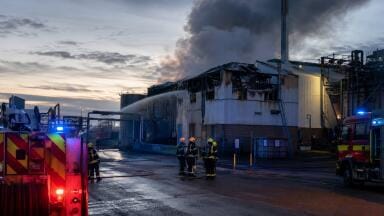
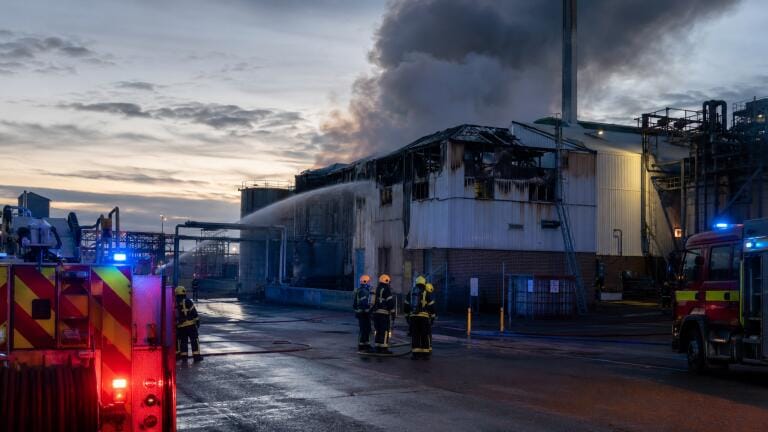
Shortly after 12:42pm local time on 3 August, an explosion and fire tore through a chemical factory in Yeongcheon, North Gyeongsang Province, around 300km south-east of Seoul.
The plant produces chemicals, including hydrogen peroxide, for use in cosmetics manufacturing.
Of the 13 employees working at the site at the time, one was seriously injured, two others sustained relatively minor injuries, and one remains missing.
The force of the blast was felt well beyond the plant boundary: windows were shattered at a convenience store roughly 300 metres away, and nearby residents reported feeling the shockwave in their homes.
Firefighters initially struggled to approach the site because of intense flames and toxic smoke, and had to call in helicopters to help bring the fire under control; the main blaze was extinguished by 6:13pm.
The cause remains under investigation.

Hydrogen peroxide is a widely used oxidiser across cosmetics, textiles, pulp and electronics manufacturing, valued for its bleaching and disinfectant properties.
But it carries a well-understood hazard profile: concentrated solutions decompose exothermically into water and oxygen, a reaction that accelerates in the presence of contaminants, heat or certain metals, and can release enough oxygen and heat in a confined space to support rapid combustion or, in the worst cases, a pressure-driven explosion.
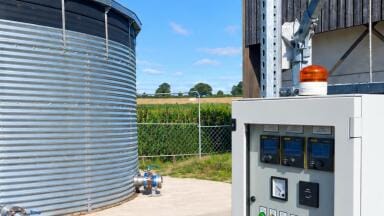
None of that is new to chemical safety engineers, and it is precisely why fixed and portable gas and vapour detection, together with thermal monitoring of storage and reaction vessels, sit high on the hazard controls list for facilities handling it at scale.
Facilities handling concentrated hydrogen peroxide are typically subject to storage segregation and venting requirements, separating stock from incompatible materials and using vented rather than sealed containers wherever practicable, precisely because a slow decomposition can go undetected for hours before pressure or temperature readings move enough to trigger an alarm.
Whether those controls were in place and functioning at Yeongcheon is a question for the investigation, not for speculation from outside it.
What isn't yet clear from public reporting is where, in this case, that chain of controls broke down, or whether it did at all; investigators have not released findings on the immediate cause.

What the incident does put back on the table, for readers working in industrial gas detection, is the practical question of detection lag: continuous monitoring for oxygen enrichment, off-gassing or abnormal temperature rise is only useful if alarm thresholds, sensor placement and response protocols are matched to how quickly a peroxide decomposition event can move from a containable anomaly to an uncontained one.
South Korea has been the site of several serious chemical and industrial plant incidents in the past two years, and its regulators have progressively tightened hazardous-chemical oversight as a result.
This latest incident is a discrete, still-unresolved event rather than part of that broader regulatory story, and it will be worth watching whether the investigation into Yeongcheon identifies a detection or monitoring gap specifically, rather than a containment, ventilation or process-control failure elsewhere in the chain.
IET 36.5 Sept/Oct 2026



 Product directory