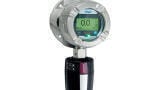
Featuring the latest infrared technology, the Polytron Pulsar Open Path Gas Detector from Draeger (Germany) is able to detect hydrocarbon leaks within a line of sight of up to 200m.
Designed to provide failsafe detection of a wide range of hydrocarbons, this robust unit has built-in directional guidance and can be both aligned and commissioned without the need for special training.
Explosion proof and ideal for the detection of the alkane series, from methane to hexane, as well as propylene, methanol, ethanol and ethylene, the Polytron Pulsar is easy to use and can be commissioned by just one person. The integral calibration requires no manual adjustment or standard test gas and the alignment and signal strength parameters can be logged and used to determine optimumoperating conditions.
Carrying a Safety Integrity Level rating of 2 (SIL 2) and offering a response time of less than two seconds, the Polytron Pulsar is designed to ensure that all faults are detected, thereby providing failsafe protection. A continuous signal between the receiver and transmitter allows the system to adapt to difficult environmental conditions, and high power xenon lamps, combined with a sophisticated algorithm which varies their intensity and frequency, makes the unit immune to solar radiation, stack flares, arc-welding and resonance effects from rotating machinery. Impervious to the effects of fog, mist and snow
across the beam, it also features heated optics to eliminate snow and icing and prevent condensation.
The internal data logger maintains a detailed record of the previous 7 days of operation, and consolidates records for the previous 32 weeks. Containing essential information, these records can include actual readings, events such as beam block and gas alarms, warning flags, signal strength, alignment, supply voltage and internal temperature.
Digital communications between the field and the safe area can also be provided, without the need for extra cable cores, by the addition of HART. Enabling a complete installation to be monitored from a single workstation, a HART configured system provides real time information on the status of an individual detector as well as configuration and historical data of each device. Useful when planning maintenance, HART can also provide substantial cost savings, particularly where detectors are located in hard to reach areas.
In addition, gas calibrations and the signal span can be accessed and changed remotely with an AI500 digital interface. For larger installations, up to 32 AI500 devices can be connected via an RS485 interface to allow up to 128 Polytron Pulsar units to be monitored. Meeting ATEX, IECEx UL, CSA and GOST approvals, the Polytron Pulsar
can be supplied with a variety of operating distances from 4 to 60m, 30 to 120m or 100 to 200m and is designed for use in temperatures ranging from –40 to +60°C.





 Product directory