Fixed gas detector
Published over 5 years ago. See the latest and most current information on Fixed gas detector.
Teledyne Gas & Flame Detection is taking the global fight against COVID-19 to new levels, using its class-leading gas detection and monitoring technologies to not only support vaccination programmes, but prevent the potential for virus propagation. The company’s innovative solutions are in prime position to ensure the effective control of this and any future pandemics that may arise.
Gas detection can play a major role in the deployment of the Pfizer-BioNTech vaccine, which is manufactured in locations including the US, Germany and Belgium. This vaccine requires storage and transportation at -70°C in sealed containers due to its mRNA (Messenger RNA) molecule technology. Such a low temperature is maintained using dry ice.
Dry ice is solid, frozen carbon dioxide (CO2). However, at temperatures above -78°C, CO2 sublimates, which is when it becomes gaseous and potentially dangerous. CO2 can act as an asphyxiant and a toxicant as it is heavier than air and tends to take the place of oxygen, leading to a risk of anoxia. These dangers can present issues for factory, logistics and healthcare workers unfamiliar with handling and manipulating dry ice. Clearly, there is a global need for vaccine urgency, but this should not be at the expense of worker health and safety.
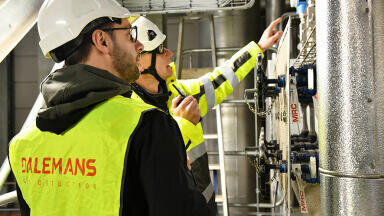
CO2 detection solutions are deployable at all stages of the deep-freeze delivery chain. The Pfizer-BioNTech vaccine makes use of a specially developed transport box that contains dry ice and is fitted with GPS trackers. Each reusable box can keep up to 5000 doses of vaccine at the right temperature for 10 days, if it remains unopened. In addition, destination countries can choose to store the vaccine in a freezer farm for up to six months at -70°C. For manufacturing sites, logistics centres, transport hubs and healthcare facilities, effective CO2 detection can provide high levels of site and personnel protection.
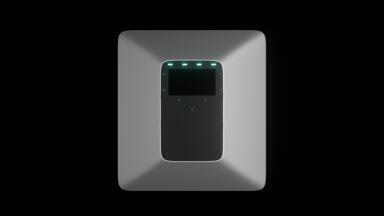
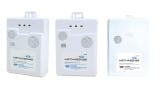
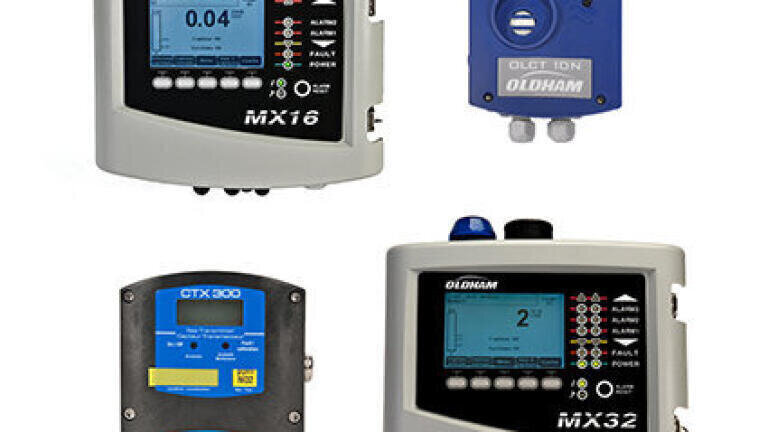
Teledyne Gas & Flame Detection understands the day-to-day dangers that can arise when using gases such as CO2. For this reason, the company offers a number of optimised solutions, including Easy Duo. The cost-effective Easy Duo package pairs the innovative MX 16 digital/analogue controller with the proven OLCT 10N fixed digital gas detector to ensure a complete solution designed with ease-of-use and installation in mind. Easy Duo requires little more than a power connection and a cable between the control unit and detector (supplied as standard). No configuration software is necessary.
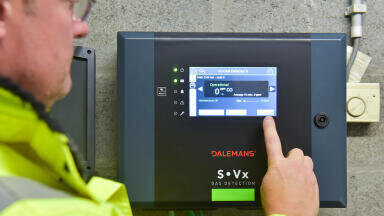
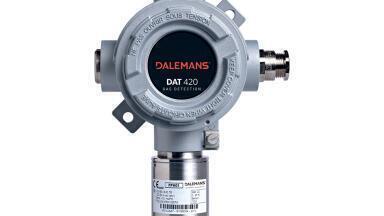
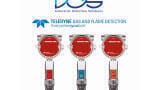
Alternatively, Teledyne Gas & Flame Detection can supply its renowned CTX 300 gas detector, which uses a dedicated sensor for CO2 detection over three different ranges: 0-5000 ppm, 0-5% vol. and 0-100% vol. Users can pair the CTX 300 with the MX 16 controller (single channel, single detector), or the MX 32 (one or two channels and up to eight detectors).
As well as supporting vaccination programmes, fixed CO2 detection solutions from Teledyne Gas & Flame Detection can also serve as a weapon against the propagation of COVID-19. For instance, CO2 sensors can determine the quality of air in a room and thus identify areas that may pose COVID transmission risks. By detecting higher levels of CO2 it is possible to assume that the room has poor ventilation or too many individuals present.
Such a solution can even form part of a ‘smart system’. Here, connection to sensors can alert individuals to the risk, perhaps via a system of red/green (stop/go) safety lights, or activate environmental controls that allow outside air to access the space.
Fixed solutions from Teledyne Gas & Flame Detection will offer value far beyond COVID-19 as they will help in the fight against future airborne diseases, and better mitigate against the economic effects of lockdowns.
IET Guide 2026

 Product directory