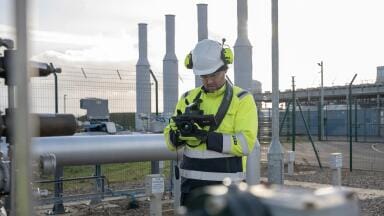
Environmental laboratory
Author credit – Brian Back, Radio Data Networks Limited
It was said by the late HRH Prince Philip during a BBC interview in 2016 that “everything that wasn't invented by God was invented by an engineer."
Whilst this might appear to be a bit of a simplification, without a doubt engineers and scientists have indeed helped to change the face of our planet for good and for bad – often with the bad being overlooked or misunderstood for years, blurred with those of naturally occurring in nature and time.
For the first time in history, we are starting to develop tools that enable us to see the reality of our actions, tools which are analogous to speedometers in cars. They show us how far over the speed limit we are, at what speed we are likely to hit the metaphorical brick wall, why we now urgently need to invest in some brakes to slow us down and hopefully, to make things smarter, more adaptive.
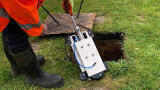
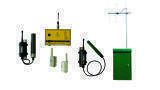
Take sensors, for example. Many sensors are high maintenance, which alone makes them carbon intensive. They are often expensive and power hungry, too. What we need is smarter sensors that can operate autonomously on low power, cleaning themselves, self-calibrating, protecting themselves from low water levels and most importantly, sending real-time local data to operators for the purpose of control. These functions are the Holy Grail of sensing. Speaking of control, what we clearly cannot do is to rip apart our world and start again, installing larger and larger diameter pipes as all this would simply move the problem downstream, be uneconomic and highly disruptive, too.
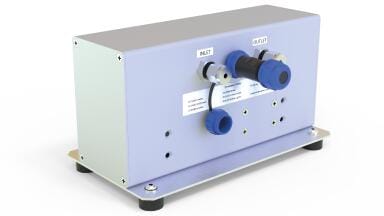
What we need to do instead is take the late Prince Philip’s observation to heart and use engineering know-how to make the most of what we already have. For example, in some cases of CSO overflows, spill incidents can be reduced by using a sensor to look at the level in front of the weir and fitting an upstream flow regulator that under real-time control throttles back the peak flow to prevent the spill in order to take advantage of any available storage upstream in the sewer pipes and laterals.
The same theory applies to SuDS, too, especially detention ponds. Again, these can be optimised with smart flow and water quality sensors to strike a balance between amenity water quality and flood protection downstream. Such a balance might mean inhibiting the flow when downstream levels downstream are high in this case and in other cases, triggering a flush whenever it can safely do so to turnover and replenish the water.
To make a long story short, it is entirely possible for us to engineer a more resilient and adaptive water system using a combination of smart sensors, real-time control and retrofit actuators. So, let’s get to work.
IET Guide 2026

 Product directory