Environmental laboratory
Frontiers says the declaration is meant to improve interoperability across human, animal, plant and environmental data through shared standards, collaboration and 'AI-ready' open data management, while working across existing systems rather than creating an entirely new one.
One Health is already an active framework across Asia and the Pacific, not just a European policy slogan.
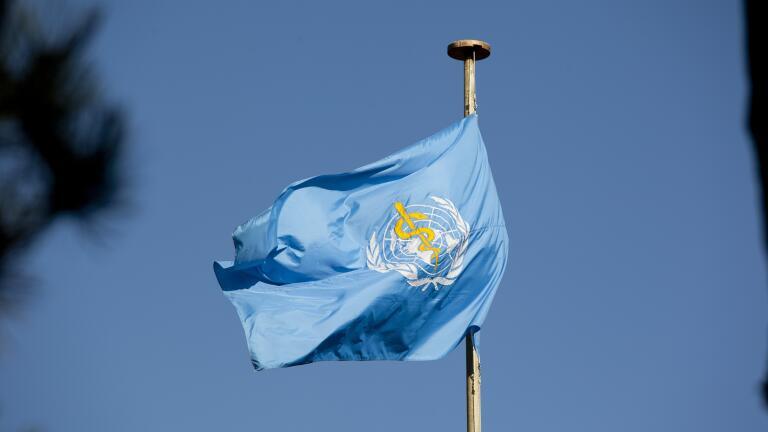
WHO’s South-East Asia office has a dedicated One Health programme and has published a regional summary of One Health initiatives across the Asia-Pacific.
In April 2026, WHO South-East Asia also called for a stronger One Health approach to address increasingly interconnected health risks in the region.
FAO, meanwhile, held a January 2026 Southeast Asia workshop on avian influenza explicitly framed through One Health, and WOAH’s 2026 regional events calendar for Asia and the Pacific includes multiple One Health-related workshops and trainings.
That matters because it means the declaration has potential relevance beyond European research circles.
If One Health is already shaping regional coordination in Asia around animal disease, food systems, public health and environment-linked risk, then environmental monitoring data is one of the inputs that may increasingly need to travel across those boundaries.
This is especially true where pollution, biodiversity change, zoonotic risk, food safety and ecosystem stress are being treated as linked problems rather than isolated technical silos.
WHO defines One Health as an integrated approach that seeks to balance and optimise the health of people, animals and the environment.
This declaration does not create an immediate duty for laboratories, instrument users or consultancies to submit data into a new platform. Frontiers presents it as a declaration of intent aimed at improving interoperability and convergence across existing and future datasets, with legal and ethical safeguards, rather than a mandatory submission system.
The pressure point is procurement.
If One Health keeps moving from principle into programme design, then buyers may start asking different questions about monitoring systems and data workflows.
Instead of focusing only on measurement performance, robustness and cost of ownership, they may also ask whether a system exports structured data cleanly, preserves metadata and provenance, supports controlled sharing, and can connect with wider health, food, veterinary, biodiversity or environmental datasets later.
That is the practical implication of a policy direction centred on interoperability: data architecture starts to become part of the buying decision. This is an inference from the declaration’s stated goals rather than a formal procurement rule announced in Lyon.
That could affect more than software vendors. It could shape how agencies, utilities, research programmes and large consultancies write tenders in the first place.
A dataset may be analytically sound but still have limited long-term value if it is trapped in proprietary formats, poorly described, or difficult to combine with other evidence streams.
A One Health approach pushes against that model because it assumes environmental information may need to sit alongside animal-health, plant-health or public-health data in support of prevention, surveillance and risk management.
The WHO South-East Asia material and FAO regional workshop framing both point in that direction, stressing multisector collaboration and integration of environmental and wildlife sectors into regional health-risk work.
This is relevant for programme managers, lab managers, public-sector buyers, digital leads, repository and LIMS providers, and anyone involved in specifying long-term environmental data workflows.
For that group, the significance is straightforward. If One Health continues to develop in Asia as well as elsewhere, interoperability may stop being a desirable extra and start becoming something buyers expect systems to support from the outset.
There is still uncertainty. The Lyon summit produced commitments and coordination language, but not a detailed operational roadmap showing exactly how this will translate into funding conditions, data standards or procurement templates.
So this is best treated as an early directional story rather than an immediate compliance alert. But that is often where trade readers get the most value: long before new expectations harden into standard tender language.
That is the real significance here. Not simply that Frontiers signed a declaration, but that One Health is already active in Asia and may increasingly influence what buyers expect environmental monitoring systems to produce: not just accurate readings but data that can move, connect and remain useful beyond the original task.
If that happens, the first pressure will fall on workflows, formats, metadata and procurement specifications.
IET Guide 2026
 Product directory