Environmental laboratory
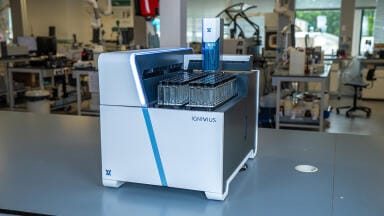
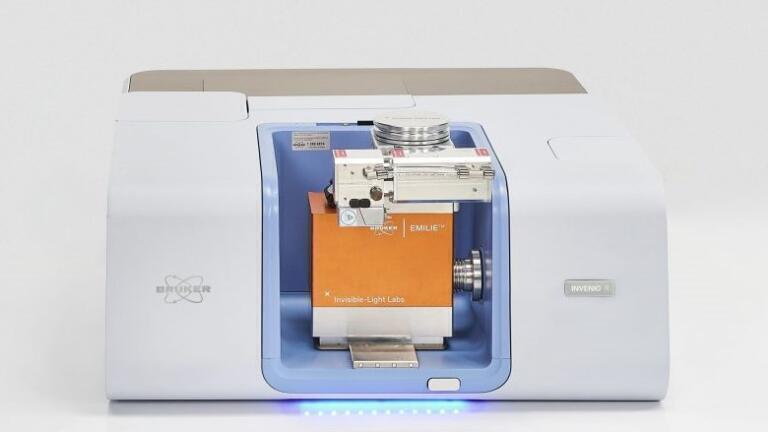
Bruker’s INVENIO FT-IR spectrometer has long been a benchmark in infrared spectroscopy, offering unmatched flexibility, precision, and performance for both routine and advanced research applications. Now, with the integration of EMILIE™, the world’s first nanomechanical infrared analyzer for FT-IR spectrometer, the INVENIO platform is entering a new era of ultra-sensitive material analysis.
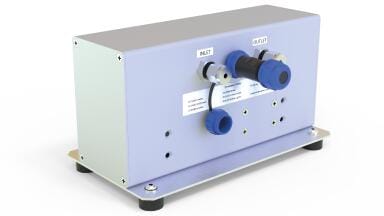
This significant leap forward in the detection and characterization of trace-level substances. EMILIE™ enables picogram-level sensitivity without the need for cryogenic cooling, making it ideal for analyzing minute samples such as aerosols and nanoplastics. Its ability to directly collect samples and perform in-situ thermal desorption opens new possibilities for researchers working in environmental science, life sciences, and materials development.
EMILIE™ integrates effortlessly into the INVENIO system, leveraging its modular architecture and advanced detector configuration. INVENIO supports up to seven software-controlled detectors, including the DigiTect™ slot and MultiTect™ unit, allowing simultaneous multispectral analysis across the far-infrared (FIR), mid-infrared (MIR), and ultraviolet/visible (UV/VIS) ranges. This flexibility is further enhanced by the INTEGRAL™ interferometer and automated beam splitter changer, which enable fully automated, single-click measurements across the entire spectral range.
The result is a system that not only delivers high sensitivity but also maintains the robustness and ease-of-use that Bruker is known for. Researchers can now perform complex analyses without complicated sampling methods, allowing for greater confidence, speed, and reproducibility.
The EMILIE™ and INVENIO collaboration is poised to transform research workflows across multiple disciplines. In environmental science, it facilitates the detection of micro and nanoplastics at previously unreachable concentrations, as well as detect ultra-fine aerosols down to 10 nm. In pharmaceuticals, it enables precise monitoring of drug stability and protein folding. In materials science, it supports the characterization of polymers, semiconductors, and advanced composites with unprecedented detail.
Bruker’s OPUS software complements this hardware integration with powerful analytical tools and user-friendly workflows. Researchers benefit from guided measurement protocols, extensive spectral libraries, and support for Python scripting, allowing for customized data processing and automation. Recent updates include multi-measurement workflows, automatic data export, and enhanced validation features, ensuring that users can maintain data integrity while accelerating discovery.
True to Bruker’s commitment to innovation and sustainability, the INVENIO platform remains fully upgradeable in the field. As research needs evolve, users can adapt their systems with new accessories, detectors, and software enhancements. The integration of EMILIE™ is not just a technological advancement; it’s a strategic investment in the future of spectroscopy.
IET Guide 2026

 Product directory