CEMS
Methane is a potent greenhouse gas with significant implications for climate change. Accurately quantifying methane emissions is essential for environmental regulation and industrial accountability.
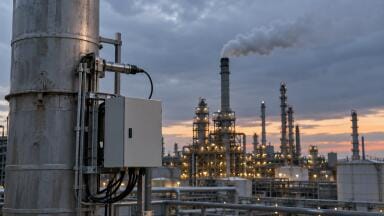
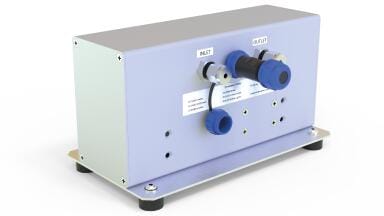
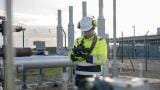
To help companies and operators meet these requirements, DEUS utilises advanced, high-precision instruments to collect real-time methane concentration data. Measurement data is aggregated using AI and combined with meteorological information such as wind speed and direction to analyse the dispersion of emissions. Using a quadrant-based mapping system, this approach helps quantify and identify high-emission zones influenced by local environmental factors.
Ehsan Tavakoli, COO and Co-founder of DEUS Pollutrac, presents at CEM Middle East, exploring the challenges of continuous methane emissions quantification using point sensors. Key challenges include spatial limitations, sensor calibration, environmental interferences, and data integration complexities. While point sensors provide real-time methane concentration data, they face significant challenges in accurately representing dispersed emissions. Variations in wind patterns, atmospheric stability, and background methane levels can lead to inconsistent readings, affecting overall measurement accuracy.
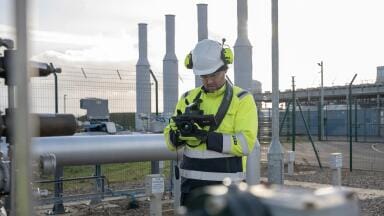
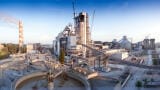
A key highlight of this presentation is a case study on methane emissions monitoring at a coal and gas-powered power plant. The study examines methane leakage sources, quantification challenges, and the integration of multi-sensor monitoring systems with dispersion models. It provides insights into real-world challenges industries face in monitoring emissions and explores innovative approaches to improving detection accuracy.
IET Guide 2026

 Product directory













.jpg)