Business news
While much of the global conversation today seems to focus on protectionism and drawing up barriers, it is encouraging to see examples of companies taking a different approach. In process analytics, collaboration has always mattered. Standards, safety frameworks, and technological advances rarely develop in isolation; they grow through shared experience across borders and industries. PerfectSampleGas (PSG) is actively pursuing that approach.
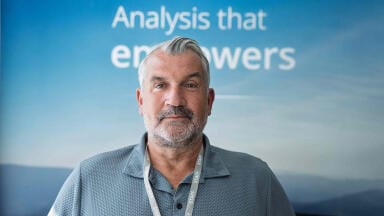
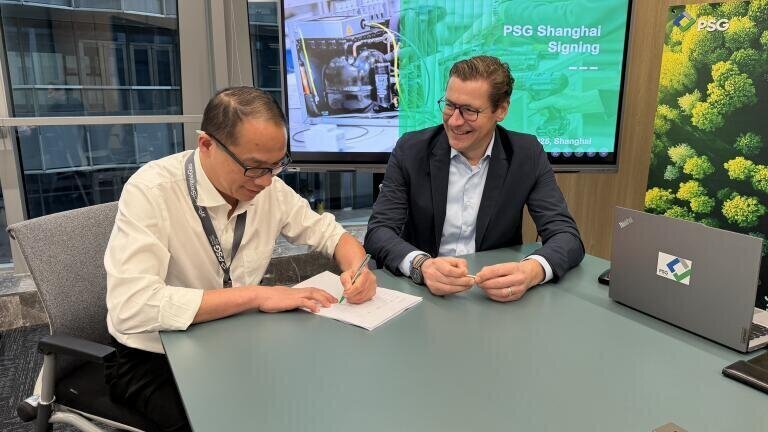
The company has been expanding internationally for some time, but the establishment of PSG Shanghai represents a more decisive step. Rather than serving the Chinese market remotely, PSG is creating a direct presence on the ground. The move is being led by Michael Wu, a process analytical technology specialist whose career has included senior roles with Bayer and Covestro, alongside professional engagement with BASF. His experience in multinational chemical environments, combined with a strong understanding of the Chinese market, provides practical continuity beyond a symbolic expansion.
China occupies a pivotal position in the global chemicals and petrochemicals sector. It represents not only vast production capacity, but also an increasingly sophisticated approach to emission monitoring and environmental performance. The pace of technological development is striking, and expectations around efficiency, reliability, and compliance are rising just as quickly. For a company focused on gas sample conditioning and analytical performance, being close to this environment is more than a commercial convenience; it offers exposure to fast-moving projects and emerging standards that are likely to influence global practice.
Establishing a base in Shanghai is therefore more than a geographic move; it is a practical response to where industrial momentum is happening. Being closer to customers and engineering teams shortens response times, improves technical dialogue, and makes knowledge transfer more immediate. It also allows collaboration to go beyond distribution agreements, opening the door to joint projects and shared technological development.
There is a broader lesson for the engineering and analytical community. Internationalisation, when approached thoughtfully, is not simply about exporting products. It is about participating in a wider technical ecosystem. As environmental regulation tightens and process optimisation becomes ever more data-driven, the exchange of experience across markets becomes a competitive advantage in itself.
PSG’s mission — to develop precise and reliable sample conditioning solutions for gas analysis — remains unchanged. What has evolved is the recognition that delivering that mission globally requires presence where innovation and industrial growth are most active. In this sense, the Shanghai initiative reflects an understanding that sustainable progress in process analytics depends on collaboration that is genuinely international.
IET Guide 2026

 Product directory