Air sensors
Published over 4 years ago. See the latest and most current information on Air sensors.
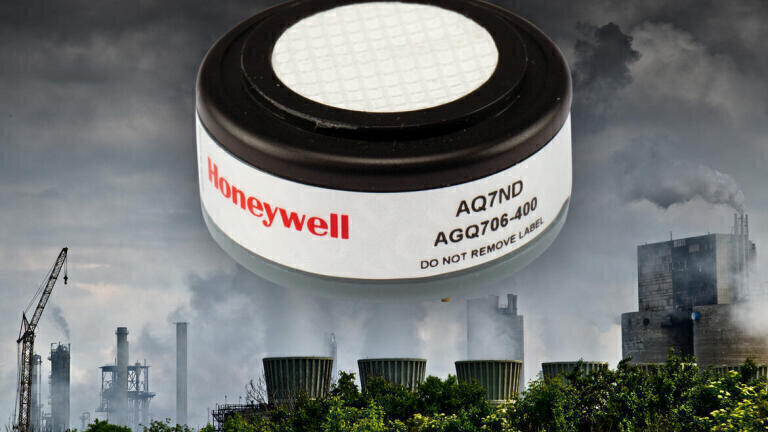
Honeywell high performance AQ7 gas sensors are engineered for ambient environmental air monitoring applications. Advances in technology have led to exciting and rewarding improvements in living standards but have also contributed significantly to a variety of serious environmental issues. Among these are the release of many types of chemical pollutants into the atmosphere that contribute to global and local environmental issues such as the greenhouse effect, sick-house syndrome, and ozone depletion. In addition to meeting increasing market demand for environmentally conscientious solutions, the hazards of environmental pollution can be capable of causing severe injury within a short time period.
Developers are addressing this challenge as they concentrate on outdoor air pollution, including emissions caused by combustion from motor vehicles, solid fuel burning, smoke from brush fires, windblown dust, pollen and mold spores. To meet these new gas-sensing challenges, Honeywell is committed to providing high-resolution, compact, robust, accurate, and reliable gas sensors for use in non-industrial environmental applications.
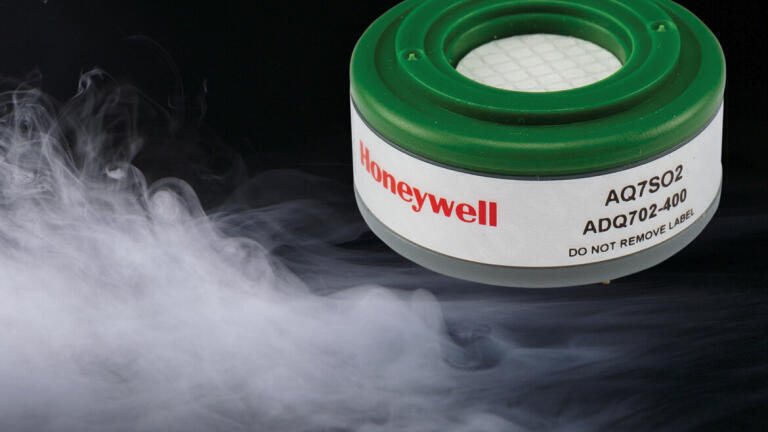
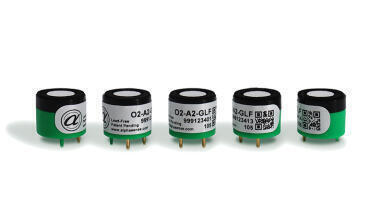
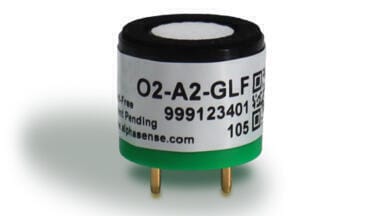
Honeywell is introducing the AQ7 Series Gas Sensors that offer high resolution and low detection limits as well as high correlation with control stations for ambient air quality (AAQ) applications. The 4-electrode electrochemical technology is highly sensitive to low gas concentrations in the range of parts per billion (ppb). These sensors provide accurate measurements and have excellent gas specificity.
The response of an electrochemical sensor like the AQ7 Series (AQ7CO, AQ7ND, AQ7OZ and AQ7SO2) greatly depends on the environmental conditions, including changes in relative humidity and temperature. This continuous environmental fluctuation can cause short-term effects on the sensor’s reliability (like impacting its sensitivity and baseline offset) as well as long-term effects (such as a inherent variation in the electrolyte concentration).
To ensure high resolution, Honeywell provides sensor parameters which can be customized to each sensor. For example, two ozone sensors are likely to have different parameters, even when the target gas is the same. Users can input each sensor’s parameters into their sensing system to establish proper environmental compensation for that specific sensor, which can then be correlated with the output of other sensors to provide the maximum accuracy possible for the overall sensed environment.
The AQ7 Series has the lowest sensor sensitivity decay over its full lifespan, which translates into the most stable and reliable sensors for environmental applications in the current market. Because the sensor is provided with individual sensor parameters, users are able to compensate for environmental effects.
The compact design of Honeywell AQ Series Gas Sensors sizes them well for portable AAQ applications. They can be used over an extensive range of gases and their ability to monitor extremely low gas concentrations, provide signal-to-noise ratio at lower detection limits, and offer full compensation for temperature and humidity using baseline offset, which combined with their high correlation with control station parameters makes them ideal for AAQ applications.
IET 36.5 Sept/Oct 2026



 Product directory



















.jpg)