Air monitoring
Published over 8 years ago. See the latest and most current information on Air monitoring.
The sampling and analysis of soil gas using automated thermal desorption (ATD) coupled with gas chromatography/mass spectrometry (GC/MS) poses several unique challenges when compared to indoor or ambient air monitoring. PerkinElmer®, Inc. have designed and patented a new sorbent tube that successfully accommodates the challenges of soil gas sampling and analysis using EPA Method TO-17, while out performing regulatory criteria for detection limits, accuracy and analyte range.
After samples were collected in the sorbent tubes, the tubes are loaded onto the automated thermal desorption (ATD) autosampler. A leak check is then performed on both the sample tube and the concentrator trap to ensure sample integrity. The concentrator trap employs a Peltier cooler instead of liquid cryogen to achieve the trap’s lower temperature. The low dead volume trap contains hydrophobic sorbents; therefore, the analytes are focused on the trap in such a way that breakthrough of this suite of analytes does not occur.
After the contents of the tube are desorbed onto the concentrator trap, the trap is heated rapidly, and the compounds from the trap are introduced into the GC analytical column in a narrow band.
For highly concentrated samples, two splitters may be employed: an inlet split between the sample tube and the concentrator trap, and an outlet split between the concentrator trap and the analytical column, enabling split ratios of several orders of magnitude. A surrogate can be automatically spiked onto all tubes prior to sampling incorporating additional validation of samples.
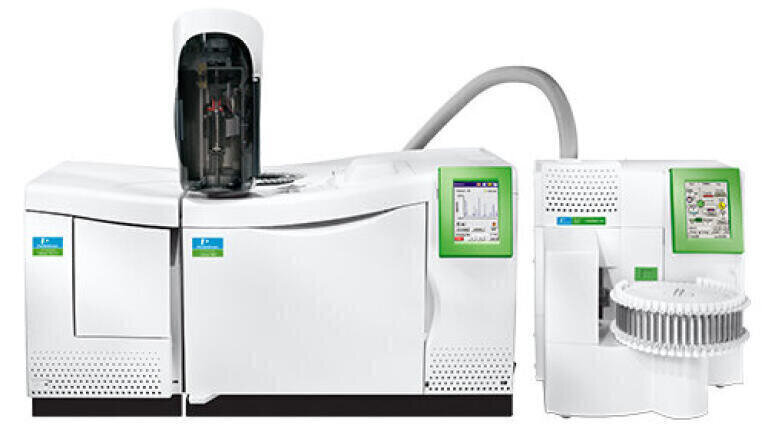
The instruments used in this study were the PerkinElmer TurboMatrix™ Thermal Desorber 650 (ATD), Clarus® 680 Gas Chromatograph (GC) and the Clarus SQ 8 Mass Spectrometer (MS).
A high temperature volatile column was used, enabling extension of the hydrocarbon range past naphthalene while still focusing the most volatile compounds. 86 target compounds and diesel were investigated.
The standards were diluted with purge and trap grade methanol to attain the required concentration for the following experiments: Breakthrough, Recovery, Water Management, Precision, Dynamic Range, and Detection Limits.
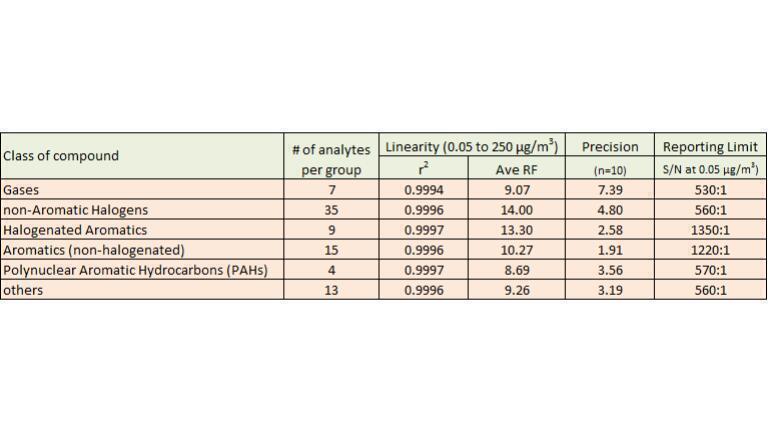
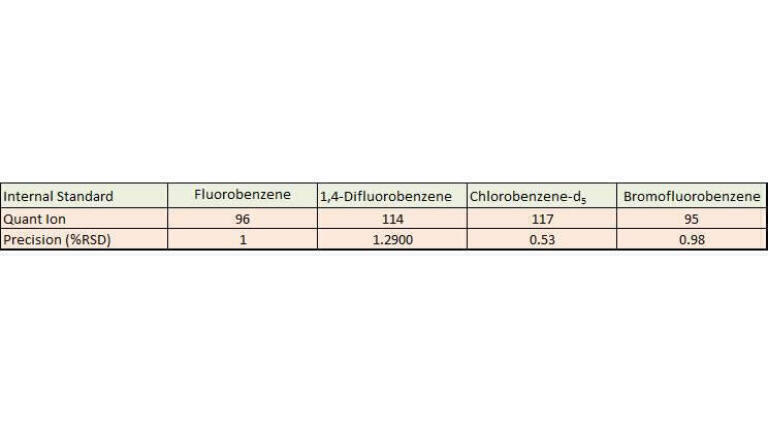
As demonstrated in Table 1*, the data collected shows that precision, linearity and reporting limits are all excellent for all classes of compounds and out performs all regulatory requirements and easily meets Method TO-17 performance criteria. The reporting limits are calculated using a 1 litre sample volume. The dynamic range achieved was four orders of magnitude across the target component list. The results from an automated internal standard precision study are presented in Table 2*. (Please see images*)
For further information please click here.
IET Guide 2026

 Product directory




















.jpg)