Air monitoring
Published over 14 years ago. See the latest and most current information on Air monitoring.
Three new instruments from Los Gatos Research (USA), providers of trace gas analysers, offer high precision and accuracy for monitoring power plant emissions compliance with the Mercury and Air Toxics Standards (MATS) recently announced by the Environmental Protection Agency (EPA). Specifically, LGR’s EP series Hydrogen Chloride (HCl), Hydrogen Fluoride (HF), and Combined HCl/HF Analysers allow both operators and regulators of fossil fuel power plants to measure these species with a precision of 0.1 parts per billion and an absolute accuracy of better than ±0.1% of recorded concentrations. Unlike other optical instruments, these new analysers feature the ability to deliver this performance in complex and varying gas streams, such as those encountered in power plant emissions. Plus, these analysers deliver the industry’s highest dynamic range, enabling measurement of concentrations up to 10 parts per million.
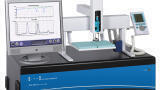
These new analysers are ideal for use in hostile industrial settings because they provide rugged, reliable and fully automated operation in a compact (14 in. x 19 in. x 24 in.) platform. Moreover, each analyser is entirely self-contained, with an internal computer that can store data on its hard drive and send real time data via the digital (RS232) or Ethernet outputs. As with all Los Gatos Research (LGR) analysers, these new HCl and HF Analysers may be controlled remotely via the Internet using a web browser.
LGR precision gas analysers are based on the company’s patented Off-axis Integrated Cavity Output Spectroscopy (OA-ICOS) technology, a fourth generation, cavity-enhanced laser absorption technique. This unique approach is both more rugged and more precise than earlier cavity-enhanced techniques, such as conventional cavity ringdown spectroscopy (CRDS) because the performance of OA-ICOS does not need ultra-precise alignment or sub-nanometer stability of its optics, or a high degree of thermal control. This ensures higher absolute accuracy, longer maintenance intervals, higher reliability and reduced cost of ownership.
AET 30.4 Nov 2026



 Product directory