Air monitoring
Published over 17 years ago. See the latest and most current information on Air monitoring.
Ion mobility spectrometers (IMS) are smart devices for the fast monitoring of trace components. The advantages of IMS are low detection limits (normally in low ppbv-range), short analysis time and comparatively smart size. By changing the drift voltage polarity, both positive and negative ions can be detected.
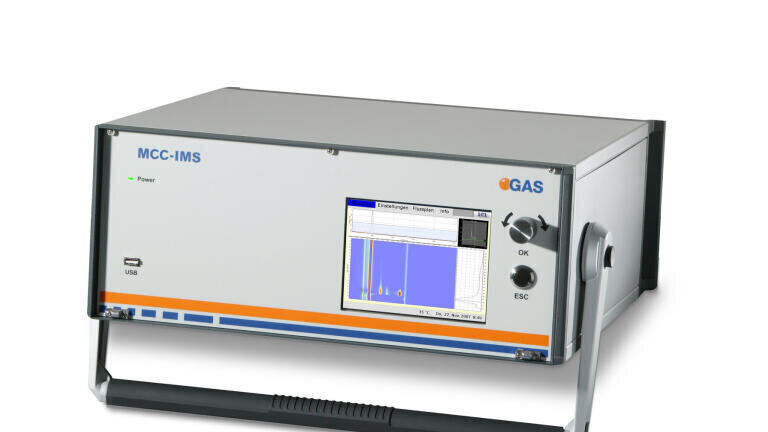
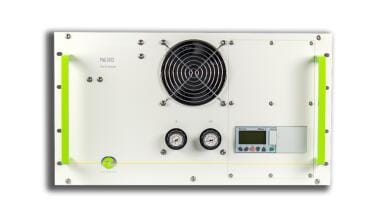
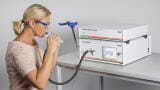
The Multi-Capillary-Column Ion Mobility Spectrometer (MCC-IMS) made by G.A.S. Gesellschaft für analytische Sensorsysteme mbH, Dortmund, Germany (www.gas-dortmund.de) combines the high selectivity of a Gas Chromatograph (GC) with the extraordinary sensitivity (low ppbv) of an Ion Mobility Spectrometer and is therefore an excellent solution for analytical measurement assignments, even in complex mixtures. The gas samples can directly be introduced due to the integrated pneumatic system (electrical six-port valve and pump) and the fast chromatographic separation using a special multi-capillary-column assures the chromatographic pre-separation of disturbing matrices like moisture. The system operates either in a manual or fully automatic mode including data acquisition, -analysis, visualisation and possible data transfer to external devices. Thus, this instrument is especially suitable for special air analytical measurements like the monitoring of clean rooms, industrial process and quality control (e.g. chemical, pharmaceutical or food industry) as well as for the analysis of exhaled breath in medical applications or personal safety.IET 36.5 Sept/Oct 2026


 Product directory




.jpg)



















.jpg)
.jpg)