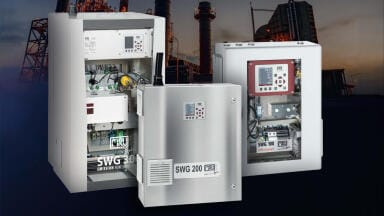
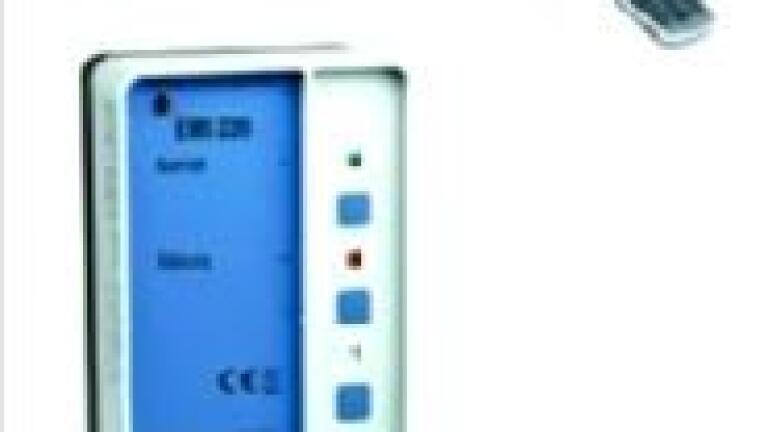
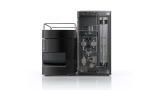
The new AFRISO-EURO-INDEX EMS 220 event reporting system was developed
for monitoring buildings, tanks, ducts, technical facilities and production processes. Switching sensors (gas/smoke alarms, fire alarms, oil and water alarms, window and door contacts) as well as continuous sensors (level sensors, low-level alarms, error or malfunction alarms) can be connected to EMS 220. If certain events occur, the person in charge is immediately notified via SMS. It is also possible to
poll the status of the objects to be monitored via mobile phone. EMS 220 can also send the measured and alarm data to the AFRISO Net Webservice.
This allows for optimum documentation and management of continuous
measured results. Reports or trend charts can be created on the basis of customer specifications. You can access your password-protected measured results from anywhere and at any time via the Internet. EMS 220 features and analogue input (4-20 mA), two digital outputs and a probe input for an optional level indicator. The EMS 220 is supplied with 220 V AC. The system is easy and fast to install and commission. EMS 200 is particularly suitable for small and medium-sized businesses and industrial plants for simple monitoring tasks.

 Product directory


















.jpg)