Water/wastewater
In water and wastewater treatment, conditions rarely remain stable for long. Influent parameters can shift unexpectedly, new dischargers frequently appear or disappear, and regulators demand increasing accountability. For operators on site, this often leads to familiar frustration: by the time a problem is detected in a routine sample or lab result, the opportunity to address it has often already passed.
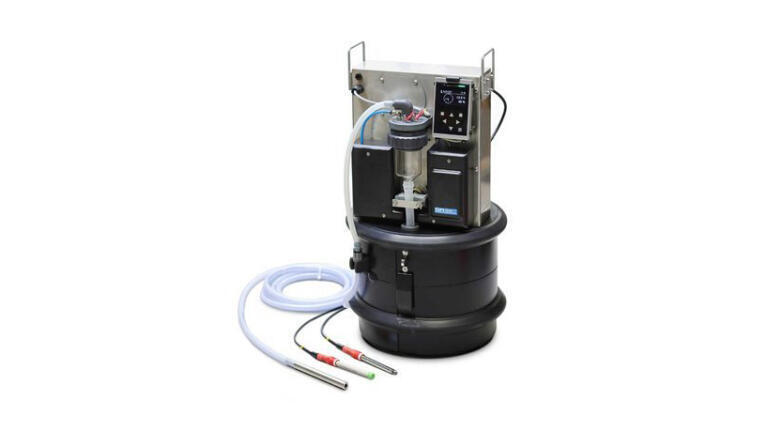
That’s why the industry is starting to move beyond isolated measurements towards a more connected and responsive approach. ORI’s ATEX-certified NEMO system exemplifies this shift in thinking. Built around the concept of “Sensing & Intelligence,” it integrates online monitoring, event-based sampling, and data logging into a unified solution. In simple terms, it doesn’t just alert you to changes—it helps you understand what changed, why it changed, and why it still matters.
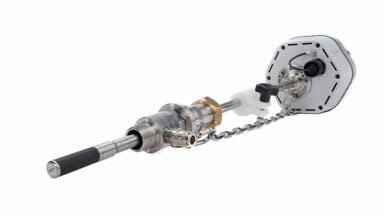
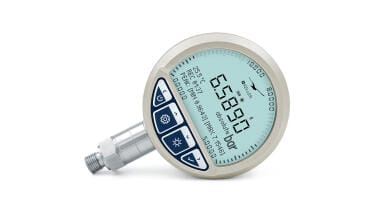
A large part of that comes down to how the system handles sensors. Modern digital devices such as Mettler Toledo ISM and Dräger Pac can be plugged straight in and recognised immediately, without the usual setup headaches. But more importantly, they bring far more to the table than a single reading. Alongside the core measurement, operators can see temperature, sensor health, identification details, and the remaining life of the sensor. It’s the kind of added context that makes a real difference when you’re trying to interpret what’s happening in a live process.
What stands out in practice is how quickly the system can respond. Instead of spending time configuring inputs and waiting for data to build up, operators can define limits and let the system do the watching. The moment something drifts out of line, NEMO reacts. That might mean flagging an issue straight away, or triggering a sample at exactly the point where something unusual occurs.
That last point is particularly valuable. Anyone who has worked with routine sampling knows its limitations—you either miss the event entirely or end up piecing together what happened after the fact. By contrast, event-triggered sampling captures the evidence in real time, whether it’s a sudden pH swing, a conductivity spike or a burst of hydrogen sulphide. It gives operators something concrete to work with, rather than a delayed snapshot that may no longer reflect reality.
The overall effect is subtle but important. Instead of constantly chasing problems, operators are better placed to stay ahead of them. They can see patterns developing, understand the causes behind process changes, and respond with confidence rather than guesswork.
With NEMO, ORI is not reinventing monitoring from scratch, but it is showing how much more effective it can be when sensing, sampling and data all work together. In a sector where timing and insight are everything, that kind of joined-up thinking is becoming less of a luxury and more of a necessity.
IET Guide 2026

 Product directory