Water/wastewater
Published over 17 years ago. See the latest and most current information on Water/wastewater.
The human and environmental exposure potential of perfluorinated alkyl sub-stances such as perfluorooctane sulfonate (PFOS) and perfluorooctanoate (PFOA) has become the subject of intense research. Metrohm (Switzerland) presents an easy-to-use and economic direct-injection method for PFOA and PFOS determination in drinking water.
The currently used method for the determination of anionic perfluorinated surfactants is LC-MS/MS. The analytical methods for the determination of PFOS and PFOA in water samples generally employ a C18-SPE column, either with or without ion pairing or acidification, followed by LC-MS/MS. However, this method suffers from relatively high running and investment costs.
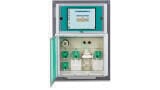
The new Metrohm method is a good alternative regarding both investment on instrumentation and usability. The method is based on suppressed ion chromato-graphy
with isocratic elution on a reversed-phase column thermostated at 35°C using an aqueous mobile phase containing boric acid and acetonitrile. The used detection technique
is conductivity. While PFOA and PFOS determination in low salt-containing water samples can be performed using straightforward direct injection chromatography, samples
with higher alkaline-earth-metal concentration, e.g. tap, lake, sludge or river water samples, should pass over a cation exchanger such as Metrohm’s Sample Preparation
Module «SPM» prior to separation.
IET 36.5 Sept/Oct 2026


 Product directory