Water/wastewater
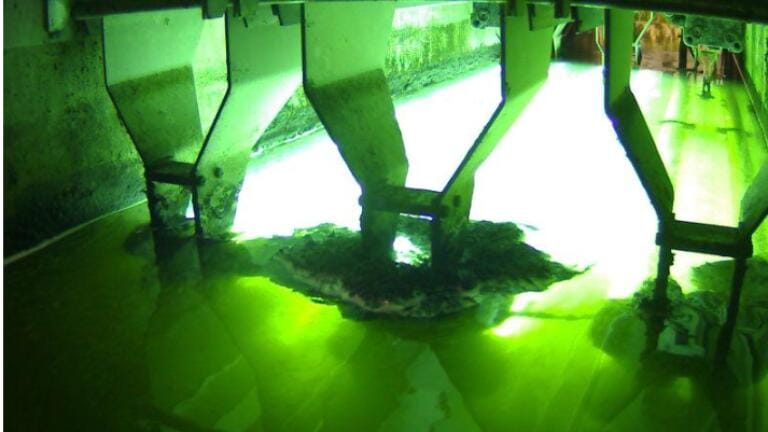
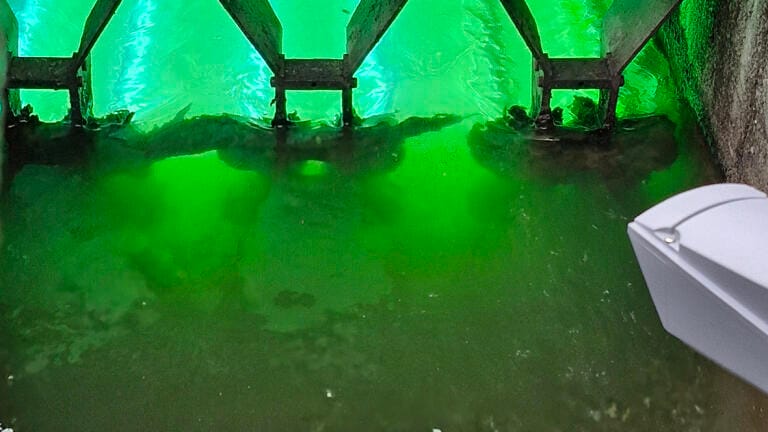
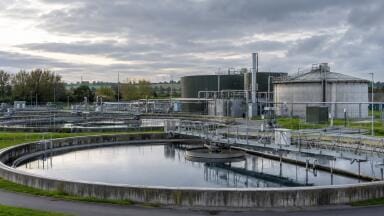
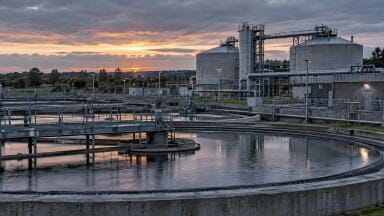
Wastewater managers at Welsh Water have installed a network of remote cameras from Meteor Communications to constantly check the performance of ultra-violet (UV) wastewater treatment processes. The remote cameras provide live assurance that UV disinfection is operating effectively 24/7. “This is such an important issue, that if the camera network helps to prevent just one discharge compliance failure, it will more than justify the cost,” comments Meteor’s MD Matt Dibbs.
One of the most important performance criteria for water companies is the number of discharge compliance failures per year. For this reason, at sites where UV wastewater treatment is employed, it is absolutely essential that disinfection is continuous and uninterrupted. However, UV treatment can stop, or appear to stop, for a number of reasons, such as a power failure or a breakdown in communications. For UK water companies, such as Dŵr Cymru Welsh Water, a site will fail its discharge consent if UV treatment stops for at least 10% of consecutive readings in any 24-hour period.
The challenge for water companies, is that their systems will raise an alert if there is a power outage or a communications failure, but that does not tell them if the UV lamps are still on, and even if they are on, it does not help them prove as such to the Regulator.
Water companies face severe financial penalties if their wastewater treatment facilities fail to meet discharge consent limits in site-specific environmental permits. Typically, these permits specify parameters such as volume, suspended solids, pH, BOD, phosphorus, ammonia etc. in order to protect the environment. However, a wastewater discharge consent will specify a microbiological limit when the discharge impacts sensitive receiving waters used for human recreation such as bathing, shellfish harvesting, or drinking water abstraction. Under these circumstances it is necessary for treated wastewater to undergo an additional process to reduce the concentration of microbiological organisms to a specified level. This is normally defined as a specific number of bacterial colony-forming units (cfu).
UV disinfection has become popular for a number of reasons, not least because it is effective against most bacteria and viruses, including Cryptosporidium and Giardia, against which chlorine, for example, is ineffective. In addition, UV treatment is relatively simple and safe to operate, and does not involve the use of chemicals.
Discharge permits specify limits to protect public health and aquatic ecosystems. Non-compliance therefore presents a risk to health and the environment. However, non-compliance also represents a significant financial risk.
In the UK, one of the ways in which water and sewerage companies are assessed is by a star rating system for their discharge compliance. This system is part of the Environmental Performance Assessment (EPA) in which a rating of 1 indicates failing performance, and a rating of 5 indicates excellent performance. A single failure to meet a discharge permit can significantly affect a company’s EPA rating (irrespective of the plant’s size) and incur substantial financial penalties. For example, in 2025 Welsh Water operated a total of 622 numeric reportable sites, 12 of which experienced consent failures, and of that 12, two were UV treatment related.
A wastewater discharge compliance failure triggers severe financial, legal, and operational consequences for a water company, directly impacting profitability and leadership. For example, regulators such as Ofwat, Natural Resources Wales and the Environment Agency can impose £multi-million fines. In addition, the UK government has recently (July 2026) announced an additional mechanism for imposing fines.
In the past, regulators were limited in their ability to impose financial penalties for frequent, minor and moderate offences, such as discharge compliance failures. This was because it was necessary to prove an offence to the same high legal standard used in criminal courts. Now, for such offences, it will only be necessary to use the lower civil standard of proof – meaning more financial penalties, delivered quicker, up to a maximum penalty of £500,000.
Under the new scheme, financial penalties must be absorbed by investors and shareholders rather than being passed on to customer water bills, and executive performance bonuses will be blocked or restricted following discharge compliance failures.
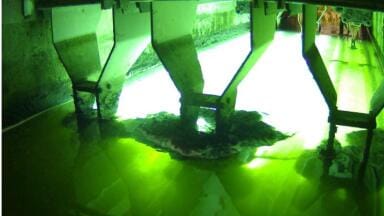
In early 2025, Welsh Water developed a plan to reduce the risk of wastewater discharge non-compliance. With a high level of sites close to bathing waters and shellfish harvesting, Welsh Water has deployed UV disinfection at sites all over Wales and across the border into the Wirral. Conscious of the need to be able to detect and act on any disruption to UV treatment, the company decided that a network of remote cameras would be necessary. However, UV treatment lanes can be challenging environments, so it was necessary for the cameras to be able to deliver reliable, clear images in damp and potentially corrosive situations, some of which are underground. In addition, the camera network needed to be secure, to operate independently of site infrastructure, and to offer simple access to real-time imagery as well as logged historical data.
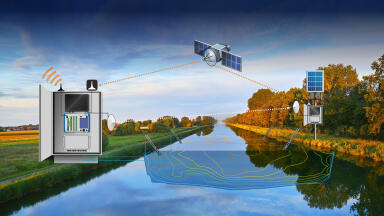
Meteor Communications was contracted to install 80 of its remote, low-power cameras across 35 sites. Operating via secure cellular comms, the cameras deliver images every 15 minutes via the MeteorCloud® web portal, which Welsh Water has access via a secure log-in.
Welsh Water has used Meteor cameras for a number of years to provide remote visibility of debris on screens at CSOs. This provided a high level of confidence in the cameras’ robustness and reliability, and in the quality of the service provided. In addition, Welsh Water staff were aware of the fact that hundreds of Meteor cameras have been operated by the Environment Agency and Natural Resources Wales for many years.
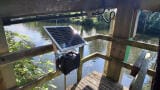
Meteor MRC cameras are able to operate on battery power, with solar charging, which means that the camera network can function independently of the local power supply.
With 24/7 visibility of UV treatment systems, Welsh Water staff can be confident that disinfection processes are in continuous operation. Importantly, access to historical images also provides an opportunity to provide evidence to the regulator – evidence that, prior to the deployment of the cameras, was not available.
In addition to a reduction in non-compliance risk, the cameras also enable staff to triage on-site problems remotely so that unnecessary site visits are avoided, and so that supervisors can prioritise asset deployment when a site visit is required. This lowers operational carbon footprint and reduces costs, especially when out-of-hours deployment is avoided.
Water based leisure activities such as wild swimming are becoming increasingly popular. Media attention has never been higher, and the public has never before been so interested in water quality. Inevitably therefore, the requirement for UV wastewater treatment will increase, and the ability to monitor treatment remotely 24/7, will enhance the water industry’s ability to maintain disinfection performance, improve operational efficiency and deliver the evidence that regulators require to demonstrate environmental permit compliance.
IET 36.5 Sept/Oct 2026




 Product directory















-MattDibbs-TimWilson-AndrewScott.jpg)