Water/wastewater
Oliver Grievson explores what is driving change in the quality or water monitors and how far monitoring has developed over the past decade.
Back in the 1950s the phrase “Garbage in garbage out” was coined.
At that time computers were in their first generation and online instrumentation wasn't going to appear in the water industry for another 20 years.
However, this phrase has become even more important in modern industry. Especially with the advent of artificial intelligence and machine learning. Or in fact the much wider concept of the digital water industry.
The wastewater industry only 10 years ago had very limited regulatory data. With only wastewater flow monitoring, under the Environment Agency MCERTS scheme, under any sort of regulatory quality control scheme.
Approximately 10 years ago the main programme of installing event duration monitoring on combined sewer overflow (CSO) outfalls started. Over the following eight years the water industry installed close to 14,500 monitors across the country.
In the modern water industry all of this data is shared within an hour of an event happening via the National Storm Overflows hub.
Unfortunately, there were no standards on the installation and no quality control. Apart from the evidence packs that were provided to the Environment Agency as part of the deliverables required by every Water Industry National Environment Programme (WINEP).
The introductory page to the hub itself identifies the data as only an “indication” of what is happening.
In fact a paper by Peter Hammond in 2024 called into question the accuracy of the EDM data.
In hindsight the mistake around the delivery of EDM data on CSOs was to not bring them under the control of the MCERTS programme.
This would require certified instruments, periodic inspection of installations to ensure accuracy and management systems to ensure that the data remains accurate.
Despite accuracies, the water industry has been requested to change the 15-minute monitoring in the network to 2-minute monitoring.
This in places will require significant investment to provide bigger batteries, along with increased maintenance. All to collect data that is known to be inaccurate in places.
The industry has also been requested to install yet more monitoring.
Over the next 10 years, the number of monitors that numbered in the region of 3,500 sites with perhaps 4,000 monitors around a decade ago, are set to increase significantly.
At the current time, the 4,000 monitors have increased to 14,500 CSO monitors. And in the region of 2,000 level monitors measuring the spill to storm (under the U_MON3 programme). Around 2,000 monitors measure the flow to full treatment (under the U_MON4 programme).
This brings the current day total up to approximately 23,000 monitors.
The remaining are all programmes of monitors that are either due to be installed or predicted to be installed over the next 10 to 15 years.
These include:
Under Section 81 of the Environment Act 2021 there is a duty to share the data with the public within an hour of it being collected. All under open data initiatives.
This is a noble concept, but in reality the risk is that there will at least be some error in the data.
At the moment the national storm overflow hub works as it is - just one piece of data with no other data to contextualise the performance of the wastewater system.
However, as we add data points, connect them together there is the possibility that the error in the data will become more apparent.
The statement as to the indicative nature of the data will suddenly become more real.
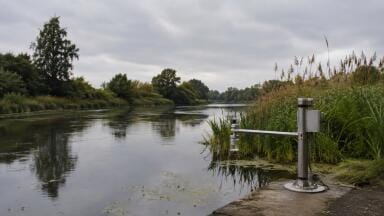
The national storm overflow hub highlights where CSOs are spilling around the country at anyone time.
There is maintenance on the devices in the field. But it is not subject to the same scrutiny or maintenance that devices are under the MCERTS programme.
In this level of criticality and performance it would be within the rights of the water companies to ensure that the monitors are working and only fixing them when a battery fails or the data is missing due to damage to the instrument.
As such these instruments and the data they produce are rightfully marked as indication only.
This is a remanent of their original installation. Water companies were asked and funded to a level where instrumentation installed was not up to the level of diligence that a regulator requires.
Since this point the lesson has been learnt and the future programmes of work (U_MON3, U_MON4 and U_MON6) are being installed and governed by the MCERTS programme.
At the current time this isn’t the case, from a regulatory perspective, for the most expensive monitoring programme that the water industry has ever seen - the Continuous Water Quality Monitoring Programme under Section 82 of the Environment Act.
Come back in September where Oliver will take a closer look at manufacturer's roles and how they're driving quality improvements within environmental monitoring.
IET Guide 2026

 Product directory