Water/wastewater
This month we hear from Graham Meller to get his thoughts on the environmental industry and where the big issues are that need tackling over the next five to 10 years.
My name is Graham Meller from Buttonwood Marketing, a specialist environmental PR agency that I founded in 2003, and in the following brief text I will rant about the things that drive me crazy!
I’d love to claim that I have been a passionate environmentalist since primary school.
But the truth is I kind of fell into environmental monitoring; it offered an opportunity to pay the mortgage, so I ran with it!
Over the last 40 years, sensors for measuring water and air have become more accurate, more sensitive, more reliable, smaller, less power-hungry, smarter and with longer periods between service/calibration.
As a consequence, continuous monitoring has become more commonplace. This is great, because sampling can miss important events and limits opportunities for trend analysis.
At the same time, communications have improved. Data can be viewed in real-time and early warning systems can provide timely alarms and help identify sources.
Looking forward, the challenge will be to utilise these vast amounts of data effectively.
AI will help derive useful insights from data, which is incredibly important because most of the data that is gathered, we don’t really need.
By that, I mean, yes of course we need it, but most of it (maybe 90+%) we don’t need to keep.
The problem is we don’t know which data we don’t need. So we need to gather it, derive insights and then compress it and/or discard unnecessary data.

Learning to better manage large quantities of data is an urgent and important task.
The number and size of power-hungry data centres is growing rapidly. So we need to be more careful with the data that we store.
For example, how many of us save vast numbers of photos and videos that no one will ever want or need to see??
Water quality monitoring and ambient air quality monitoring are two areas of particular interest for me.
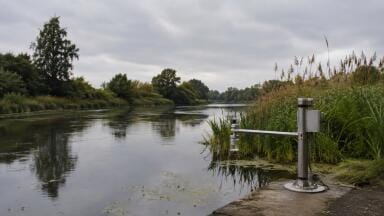
Section 82 of the Environment Act 2021 is driving a massive requirement for remote river water quality monitors in England.
Happily, for several decades, the Environment Agency has been developing equipment and procedures for effective river monitoring. So the technology and the expertise already exists.
In the next few years, we will learn a great deal about where best to site monitors, and AI will help us to interpret the data.
The same technology can be used for final effluent monitoring. This means we can instrument smaller WwTWs.
However, I do believe that the Environment Agency should be given more resources to continuously monitor rivers.
Water companies are responsible for some pollution, but not all of it. Agriculture, industry and highways also contribute.
So it seems illogical for one sector to be responsible for monitoring.
Ambient air quality monitoring troubles me greatly. I asked my local authority for my local air quality data and it told me that the previous year’s data is usually available in April of the following year!
In many areas this data is based in diffusion tubes – a 1970s technology with ±25% accuracy!
Diffusion tubes are low-cost, and mostly deliver an average concentration for one month. So no indication of short-term exposure and certainly no opportunity for real-time data or alarms.
That was fine in the last century when reference air quality stations cost a fortune to buy and maintain. But today, low-cost air quality monitors are available that measure in real-time.
They are not yet quite as accurate at reference stations, but watch this space!

If you have a network of low-cost sensors you can co-locate some of them with reference stations and use them to calibrate the network.
In my view the real travesty with air quality is the way that developers use air quality models to support their proposals.
Air quality consultants are employed to construct models that predict air quality during the construction and operational phases of their proposals. And surprise surprise, the models always predict “no significant effects”.
These models incorporate high levels of uncertainty from a multitude of sources. And then predict NO2 with 0.1 µg/m3 precision!
If I had offered that level of precision from such uncertain data in my maths ‘O’ level, my teacher would have burst a blood vessel!
We know that enormous numbers of people die prematurely every year as a result of air pollution. But the general consensus seems to ignore that, as long as we don’t exceed national air quality objectives.
This makes no sense!
Despite the mortality data, local authorities seem to be losing interest in air quality.
Doubtless, lack of funds is having an impact. But some seem to think that the electrification of the fleet will solve the problem.
Tyre emissions are a growing concern and, as with water, we need to know more about micro pollutants.
I am also extremely concerned that our current planning and development system seems to ignore the climate crisis.
Developers add ‘green spaces’, they ‘encourage’ sustainable transport, and they cover themselves in glory for proposing BREEAM excellent buildings.
But they completely ignore the massive carbon footprint of their proposals – classic Titanic deckchair management.
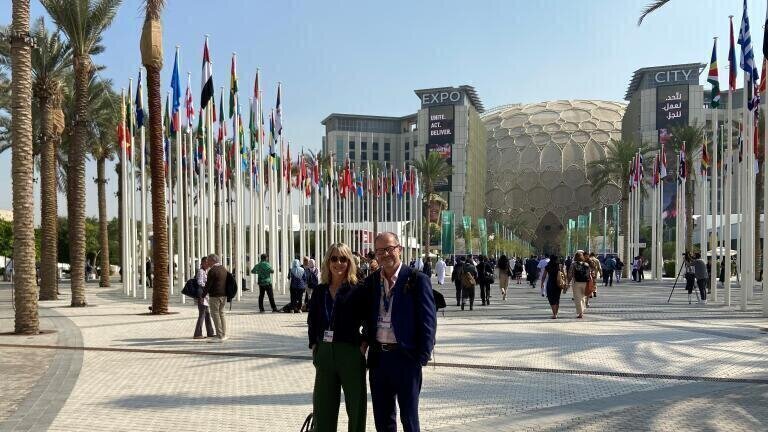
We worked for the Brazilian delegation to COP28 in Brazil.
Given the success of President Lula’s administration in tackling deforestation, this was a PR dream.
Then, strangely, we heard that Brazil was to be awarded “Fossil of the Day” by Climate Action Network International.
Initially unsettling, this was not necessarily alarming because (a) CANI shares the same climate ambitions, (b) this helps highlight the need for climate finance, and (c) they can’t give it to the same countries every day! (although there is one country that seems to be bidding for a clean sweep at COP30!)

IET Guide 2026

 Product directory