Water/wastewater
Published over 11 years ago. See the latest and most current information on Water/wastewater.
IDEXX (USA), the global leader in rapid microbiological testing for water, today announced that its Colilert-18 media is officially in compliance with the new mandatory standard ISO 11133:2014, concerning the preparation, production, storage and performance testing of culture media, for microbiology of food, animal feed and water.
The ISO 11133:2014 standard applies to all types of media formulation, including dehydrated culture media and ready-prepared media that are used for all applications, whether for conventional or rapid methods.
In addition to complying with the new ISO 11133, IDEXX was recently also accredited according to ISO 17025:2005 by the National Accreditation Board (ANAB). Accreditation according to ISO 17025:2005 is based on a detailed examination of the quality assurance systems of laboratories, paying particular attention to the continuous improvement of products and processes.
Laboratories that produce their own culture media need to perform extensive quantitative quality controls in order to test for selectivity, specificity and productivity of the media. However, laboratories that use IDEXX water microbiology media now need to perform only minimal qualitative quality controls. On request, IDEXX will provide customers with the specific microbiological growth characteristics and general information relating to the specific batch of culture medium being used.
“The high performance level of IDEXX’s culture media and excellent reproducibility between batches allow us to guarantee our customers high reliability of their analyses and simplification of their systematic control on receipt of a new batch of ready to use media,” explained Andrew Headland, Senior Business Manager, EMEA, IDEXX Water Division. “In addition to Colilert-18 media, the majority of media from our catalogue of rapid microbiological tests for water testing applications are now in compliance with ISO 11133:2014”.
Colilert-18, which is the ISO 9308-2 standard for detecting E. coli and total coliforms in water, provides quantified results in as little as 18 hours with no further confirmation of results required. It is also U.S. EPA-approved and included in Standard Methods for Examination of Water and Wastewater.
With its high sensitivity, specificity and rapid results, accurate and fast indications of any potential faecal contamination, Colilert-18 is simple to use and minimal amounts of training and equipment are required to allow operatives to set up and interpret the results in just 18 hours.
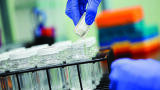
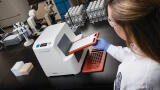
The product consists of a powder, which is added to a standard 100ml water sample and then incubated for 18 hours in the case of presence/absence determination. This step takes less than 1 minute of hands-on time. The presence of E. coli and total coliforms is subsequently determined following incubation, with coliforms indicated by the sample turning yellow, and fluorescence indicating the presence of E. coli. Where quantification of a sample is required, IDEXX has developed a simple device known as a Quanti-Tray, which consists of 51 individually sealable cells. The Quanti-Tray can also be incubated for 18 hours after which the fluorescent cells can be counted and quantified.
IET 36.5 Sept/Oct 2026


 Product directory



.jpg)







.jpg)