Water/wastewater
Published over 17 years ago. See the latest and most current information on Water/wastewater.
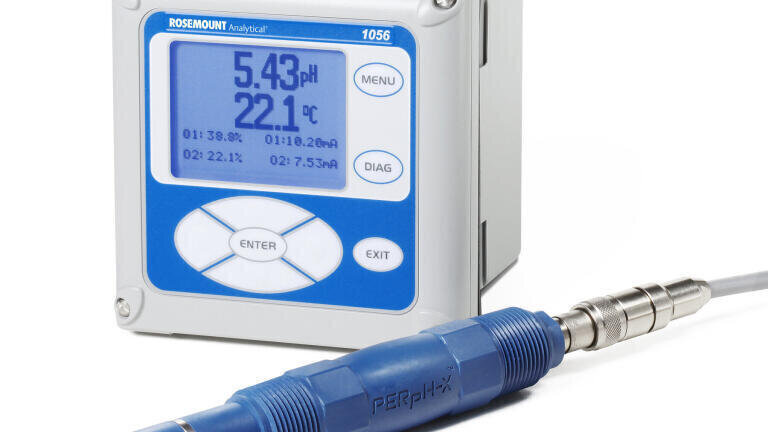
Emerson Process Management (UK) announces SMART functionality in its high-performance PERpH-X® pH sensors, Model 6081 wireless analyser, Model 1056 dual-input analyser, and Model 1057 multi-parameter analyser. These are the first in a new generation of Rosemount® Analytical sensors and analysers that will be shipped with SMART capability - embedded calibration that is uploaded to the analyser from the sensor at start-up, eliminating the need for field calibration.
“One of the biggest problems that industrial plants experience with their liquid analytical sensors is the need for field calibration,” commented John Wright, vice president of marketing, Emerson Process Management, Rosemount Analytical. “It requires many personnel hours, often in harsh and inconvenient environments with messy solutions.” “The new SMART family of sensors and analysers eliminates the need for field calibration since the as-tested calibration data is embedded in the sensor’s memory, and the analyser reads it automatically, providing immediate live process measurements,” continued Wright. “It’s a huge time and money saver and we are pleased to be able to supply it to our customers.” SMART capability is already being embedded in the company’s Model 6081 wireless analyser, Model 1056 dual-input analyser, and Model 1057 multi-parameter analyser. The new SMART-capable analysers are backward compatible with all current Rosemount Analytical pH and ORP sensors and will continue to operate with all other sensors as well as those of competitors in a standard operating format. The first sensors to be delivered with built-in SMART technology will be the family of high-performance PERpH-X pH sensors. “We’re starting initially with this valuable new capability in pH sensors since they are the most time-consuming. In the past, they have often had to be recalibrated and replaced more frequently than other types of sensors,” according to Wright. “The SMART sensors will be extremely useful to our customers. In addition to the built-in calibration, the new sensors also store calibration data making it possible to easily monitor and schedule maintenance on these sensors from a central control room.”IET Guide 2026

 Product directory