Health & safety
Published over 12 years ago. See the latest and most current information on Health & safety.
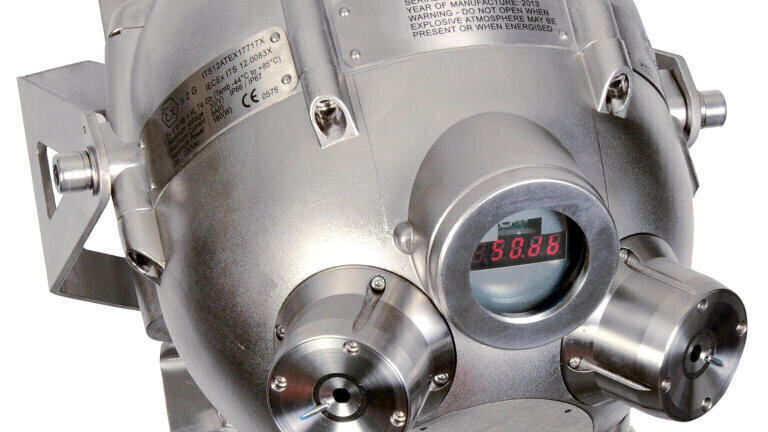
Emerson Process Management’s (USA) Rosemount Analytical GDU-Incus ultrasonic leak detector has received the highly respected Det Norske Veritas (DNV) type approval. This DNV certificate further confirms the device is suitable for use on-board marine vessels including LNG and LPG carriers, crude oil tankers, and floating production, storage and offloading (FPSO) units, all of which can suffer loss of production, or worse, in the event of a gas leak not being detected quickly.
“Detecting gas leaks in marine environments is challenging for traditional detectors which require the accumulation of a gas cloud in order to alarm,” said Eliot Sizeland, Emerson’s head of sales and marketing for the GDU-Incus. “Extreme weather and wind on vessels and platforms may prevent a gas leak from being rapidly detected, potentially allowing the incident to escalate when a quick maintenance repair may have been possible without loss of production. Since the GDU-Incus responds to the ultrasound produced by the leak, however, its performance is unaffected by these conditions. That makes it ideal for marine applications. We’re very proud that the detector withstood the rigorous testing required for the DNV certification, which further demonstrates the quality and robustness of the ultrasonic gas leak detector.”
The GDU-Incus is an advanced leak detection system using four sensitive acoustic sensors that constantly monitor wide areas for ultrasound generated from the release of pressurised gas. The GDU-Incus is suited for monitoring ventilated outdoor applications, and is engineered to withstand extreme conditions. Performance is unaffected by inclement weather, wind direction, leak direction or any potential gas dilution, with an instantaneous response to methane, hydrogen and other low molecular weight gases.
The reliable, easy-to-use GDU Incus advanced gas sensing technology does not require calibration or replacement for the life of the instrument. An integrated self-test ensures fail safe operation, and innovative sensors with no moving parts mitigate the need for maintenance.
The DNV type approval assures potential users that the GDU-Incus has undergone rigorous testing and has been determined to meet the highest quality standards. The DNV assessment process is built upon scientific research and recognised by regulators, insurers, and major clients throughout the world.
IET 36.5 Sept/Oct 2026


 Product directory




.jpg)











.jpg)