Health & safety
Published over 2 years ago. See the latest and most current information on Health & safety.
Li-Ion batteries (LIBs) are the dominating technology in battery-operated devices. LIB usage and research have shown significant growth in recent years. Gasmet Technologies has an eye on the very heart of battery safety, where we explore the chain reactions, toxic gas release and emissions, and provide the power of early detection with our gas analysis solutions.
Gas analyzers monitor fiery disasters and toxic gas exposures caused by thermal runaway. This of course involves measuring various gases, like carbon monoxide, carbonates, acids like hydrogen fluoride, and various VOCs, at the source.
Another typical research interest is battery off-gassing prior to thermal runaway. Detecting off-gassing is vital for safety, as gases like hydrogen fluoride (HF) and carbonates work as indicators of thermal runaway. Gasmet's gas analyzers can pick these up at the required low levels, e.g. typically utilized 1 ppm threshold.
Gasmet’s multi-gas analyzers utilize the FTIR technology, which enables to measure all gases of interest simultaneously with immediate results, providing a full picture of hazardous situations and of the air quality. As there is no need for time-consuming and costly separate sampling and sample treatment, you are able save time and conduct more measurements with as accurate results.
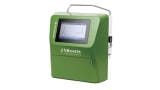
Gasmet’s GT5000 Terra and GT6000 Mobilis portable gas analyzers provide an ideal solution for different battery safety-related analysis and research. Moreover, these portable instruments serve other air quality and industrial hygiene-related tasks or for R&D purposes.
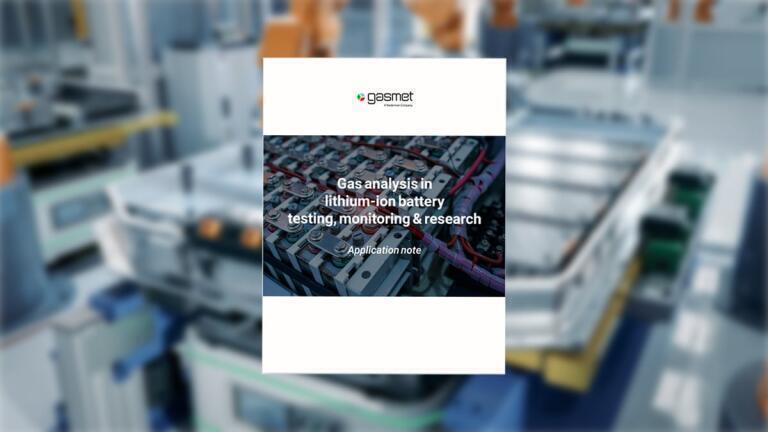
For more information, check out Gasmet's new application note “Gas Analysis in Lithium-Ion Battery Testing, Monitoring, and Research” which unveils the hazards concerning thermal runaway, toxic gases, and explosive risks in Li-ion batteries.
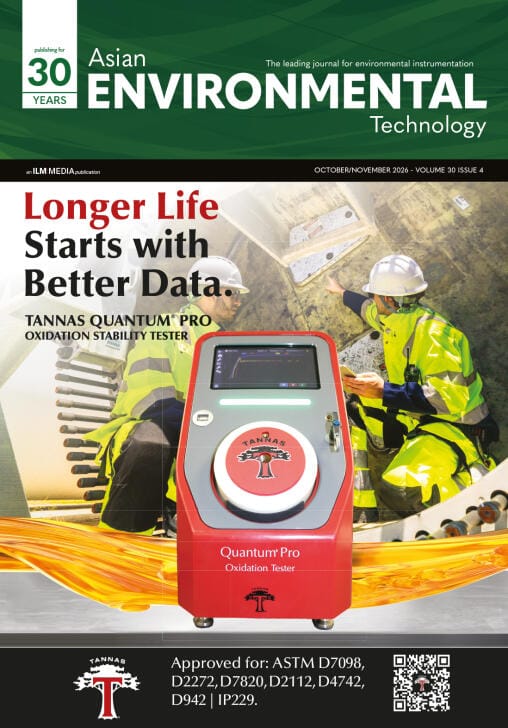
AET 30.4 Nov 2026
 Product directory