Water/wastewater
Published over 4 years ago. See the latest and most current information on Water/wastewater.
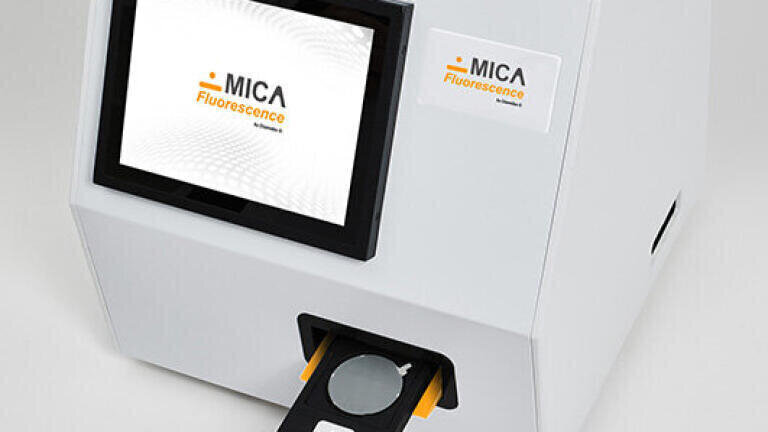
Diamidex have developed and produce the world’s first ever microcolony semi-automated counter. Thanks to its unsurpassed optical resolution and state-of-the-art software which utilises machine-learning capabilities, the MICA Fluorescence Counter detects and counts microorganisms at their early stage of microcolony.
This instrument enables operators to count microcolonies on a membrane. MICA’s counter has an optical system that takes extremely high-resolution snapshots of each membrane; these are then analysed by the counter’s software to accurately determine the number of microorganisms on each membrane.
MICA is a user-friendly turnkey system whereby the end-user is directed, one step at a time, through a protocol for the targeted microorganism. Automated counting significantly reduces the amount of uninterpretable results than traditional culture methods, but a faster turn-around.
This cutting-edge yet user-friendly device will not force you to change your habits; you can count Pseudomonas aeruginosa cultured on your usual CN agar plate, in CFU, automatically – yet much faster. You simply go through the regular NF EN ISO 16266 procedure and there is no need to change or add reagents. Incubation is reduced from 44 to 24 hours – and using the MICA to count P. aeruginosa at their micro colony stage means that CFU data is ready in just 24 hours, rather than the 44 hours you need with a manual count.
Legionella pneumophila is a ubiquitous bacterium; it grows in its natural habitat, which is hot water, and adapts to other environments with similar characteristics, this includes the human body, which has the perfect temperature for growing this pathogenic bacterium. When inhaled, Legionella pneumophila can enter the lungs to replicate until causing the potentially life-threatening Legionnaires’ disease.
With Diamidex technology’s, it is now possible to detect and count Legionella pneumophila after just 48 hours of incubation on Petri dishes, in comparison to 10 days with the standard method. Only culturable Legionella pneumophila are counted from all serogroups, so there are less uninterpretable and more accurate results; all Legionella pneumophila micro colonies present are counted rather than a few representative ones. This technology also offers a far more economical way to test for Legionella pneumophila than conventional methods.
IET Guide 2026

 Product directory