Water quality monitoring
It provides a structural map of where India’s water quality pressures originate, how enforcement has adapted, and what this says about the country’s environmental trajectory.
One clear trend is the persistence of fundamentally water-intensive industrial processes within India’s development model.
Many of the 17 sectors (pulp and paper, textiles and dyes, pharmaceuticals, fertilisers, basic chemicals, distilleries and tanneries) produce wastewater that is chemically complex, difficult to treat and highly variable over time.
Their prominence in India’s industrial mix reflects both the country’s manufacturing priorities and its large domestic markets.
The continued dominance of these industries means that India’s rivers and aquifers are exposed to a mixture of organic loads, colourants, solvents, metals and chemical residues that require constant technical vigilance.
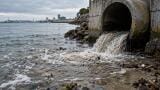
The prevalence of such sectors also explains why India’s water quality challenges are not limited to nutrient pollution or municipal sewage but include high-strength industrial effluent capable of causing acute ecological collapse.
A second trend is the transition from episodic, inspector-led enforcement to continuous, instrumentation-led oversight.
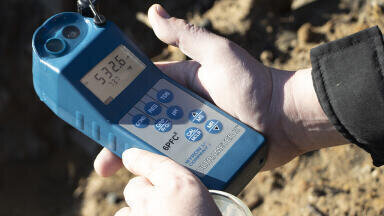
CEQMS requirements show that regulators recognise the impossibility of managing India’s wastewater burden through periodic sampling alone.
Industrial dischargers have historically used temporal loopholes, such as releasing untreated effluent at night or during monsoon flows, to evade detection.
Automated, real-time telemetry is an institutional response to this behaviour.
It represents a shift toward an enforcement model that reduces opportunities for bypassing and makes compliance visible hour by hour.
This development mirrors broader governmental moves to digitise compliance, automate reporting and integrate environmental data systems with judicial and administrative processes.
A third trend is the spatial concentration of industrial water pollution.
The distribution of the 17 categories aligns closely with river basins already under severe ecological stress.
Clusters such as the leather tanneries in Tamil Nadu and Uttar Pradesh, chemical and dye industries in Gujarat, distilleries across the Ganga basin, and pharmaceutical units in Telangana create localised but intense zones of pollution.
These clusters drive not only water quality decline but also the siting of regulatory monitoring infrastructure.
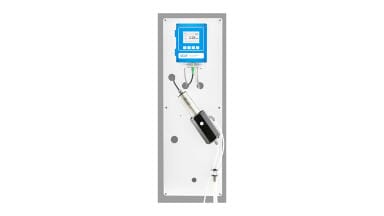
Upstream–downstream station pairs, automatic river analysers and basin-specific surveillance networks tend to proliferate in precisely those regions dominated by these industries.
This spatial logic shows that India’s pollution problem is fundamentally basin-specific rather than uniformly distributed across the landscape.
A fourth trend is the increasing influence of judicial and public pressure mechanisms.
High profile river cases and national directives have pushed regulators to adopt stricter oversight and expand continuous monitoring.
The CEQMS network is partly a response to these pressures, providing regulators with defensible, timestamped data that can withstand scrutiny in courts or public forums.
This suggests that environmental governance in India is being shaped not only by technocratic policy design but also by legal accountability and public expectations for cleaner rivers.
A fifth trend is the emergence of more stringent technical requirements that indirectly influence industrial behaviour.
Continuous monitoring exposes operational instability, treatment plant failures and pollutant spikes that would previously have gone unnoticed.
This visibility compels industries to improve process controls, maintain effluent treatment infrastructure and adopt cleaner production techniques.
The shift is gradual and uneven, but continuous monitoring has become one of the few mechanisms that reliably incentivises day-to-day compliance rather than one-off showcase upgrades before inspections.
Another trend is related to water scarcity. Several of the 17 sectors use large quantities of water, and the combination of high withdrawal and high pollution load intensifies local stress.
In basins already facing groundwater depletion or low river flows, polluted industrial effluent has less dilution capacity, magnifying environmental impacts.
This dynamic explains why some states deploy zero-liquid-discharge mandates or restrict new industrial facilities in water stressed regions.
This system thus reflects not only pollution concerns but also the broader tension between industrial growth and water availability.
The framework also reveals a tendency toward centralised data governance. CEQMS data streams flow to state boards and to CPCB’s central servers, forming a national-level inventory of industrial wastewater behaviour.
This centralisation allows regulators to compare facilities and assess cumulative pollutant loads across basins.
It signals a governance model increasingly reliant on integrated data infrastructures rather than decentralised, inspector-based enforcement.
Finally, the expansion of continuous monitoring technologies shows the growing role of the instrumentation sector in India’s environmental management.
Demand for rugged wastewater sensors, calibration systems, anti-fouling technologies, telemetry units and redundancy architectures is rising because these tools underpin the credibility of regulatory oversight.
As more states move toward remote auditing and automated alerts, the technical requirements for sensors and data systems will grow stricter, embedding environmental monitoring more deeply within industrial operations.
Taken together, these trends depict a water regulation landscape defined by high-risk industrial sectors, increasingly data-driven oversight, geographic clustering of pollution pressures and a gradual but visible shift toward more transparent and enforceable compliance.
They reflect both the scale of India’s water quality challenges and the institutional strategies being developed to manage them in real time.
IET 36.5 Sept/Oct 2026


 Product directory



.jpg)











.jpg)
.jpg)