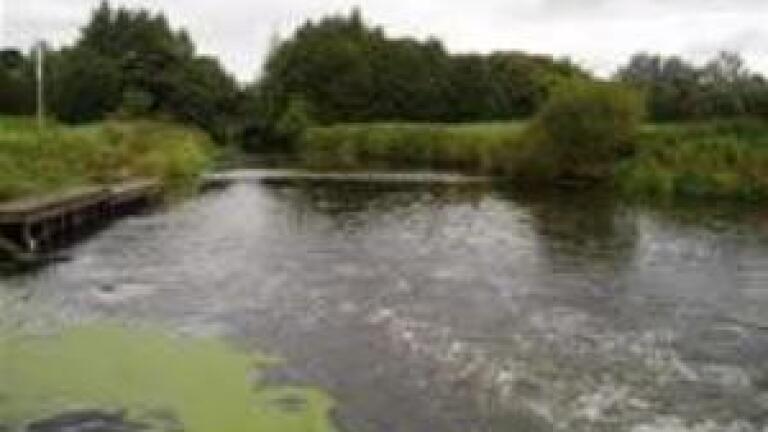
River water monitoring
Published over 4 years ago. See the latest and most current information on River water monitoring.
Members of Bath’s Water Innovation & Research Centre (WIRC) say that release of the Environmental Audit Committee Report on Water Quality in Rivers should be a wake-up call to lawmakers, regulators, various industry sectors, and the public.
Dr Tom Arnot, Co-Director of WIRC, says that the report highlights a lack of co-ordination and investment in protecting our river systems: “The current state of our rivers arises due to a weak legislative landscape which has led to sewage overspills, run-off of farm slurries and fertilisers, combined sewer overflows, and release of microplastics and other contaminants into the UK river system, putting human and environmental health at risk, and significantly damaging biodiversity.
“The report concludes that the current situation has been driven by under-funding, under-regulation, under-reporting, insufficient monitoring and enforcement, and a lack of strong environmental leadership and policy development from Westminster.”
Dr Arnot adds: “The river water quality challenge is extremely complex and involves multiple stakeholders. The biggest contributors of pollutants are the agriculture sector and the water companies, but industrial manufacturing, runoff from the transport network, and use of pharmaceutical and cleaning chemicals also release emerging contaminants. Public behaviours including flushing wet wipes and cooking oils, as well as general littering, contribute to the problem as well.”
“Finding solutions to these problems will require effective collaboration across this wide range of stakeholders. We must find ways of getting government, the regulators, landowners and the farming community, water companies, manufacturers, urban planners, and the public to come together in a co-ordinated, well-funded, well monitored way, with strong policy, regulation, and enforcement.”
Research being conducted within WIRC supports these challenges. Current research spans several themes, including reducing water consumption in domestic and industrial systems, designing and evaluating rainwater capture technologies for new developments, modelling the performance of the sewer network and the transport of pollutants in rivers, and delivering opportunities such as tracking the spread of Covid-19 and other public health indicators through wastewater-based epidemiology.
IET 36.5 Sept/Oct 2026


 Product directory


.jpg)











.jpg)