Portable & field testing
Published over 13 years ago. See the latest and most current information on Portable & field testing.
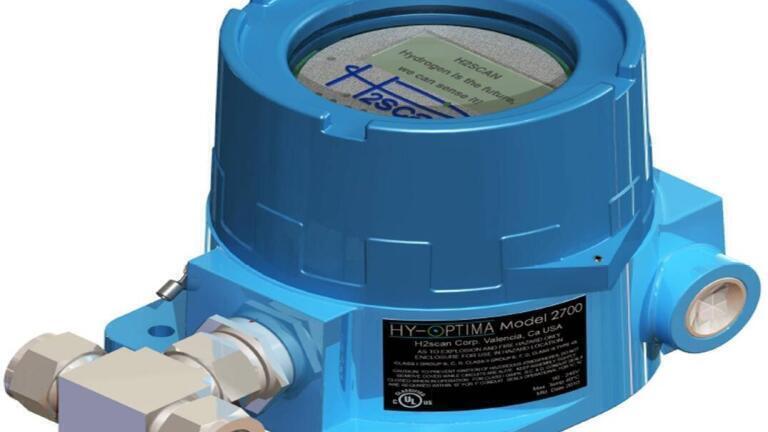
Instrumentation specialist Quantitech (UK) launched a range of hydrogen –specific gas analysers in the UK and Ireland in 2007. Since that time Managing Director Keith Golding says “The solid-state sensor technology from H2scan has proved highly popular in a wide variety of applications, but online process monitoring is becoming the most popular because of the rapid return on investment that this technology can deliver. For example, an oil refinery in California recently purchased an explosion proof version of the online analyser, the HY-OPTIMA 2700, for its isomerisation plant and this has improved process efficiency, extended catalyst life and allowed longer process runs.”
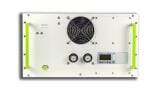
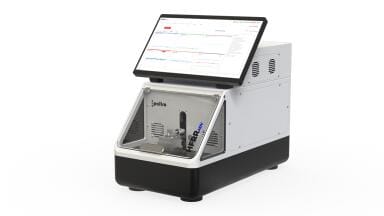
The HY-OPTIMA 2700 is the latest development in the H2scan advanced range of accurate hydrogen leak detection and process gas monitoring analysers, which have recently been included in the Honeywell UOP Schedule A list.
Designed primarily for hazardous environments in the oil and gas, hydrogen production and chemical industries, the HY-OPTIMA 2700 is available as a standalone instrument or as part of a complete, integrated process monitoring system providing a wide measurement range from low concentrations (0.5%) up to 100%. The solid-state sensor does not incorporate any consumables or moving parts and provides a 10 year expected lifespan. Mounted in an explosion-proof housing, there is no requirement for additional protection, and up to one year of data logging capacity is included.
At the California refinery, the analyser provides crucial information on the partial pressure of hydrogen across the catalyst. If the partial pressure were to drop below 125 psi, rapid cooking of the isomerisation catalyst would occur. This makes the H2scan analyser a vital tool for confirming the condition of the catalyst and detecting any potential problems, ensuring the proper operation of the isomerisation reactors.
Explaining the advantages of being able to monitor in-process hydrogen continuously, the refinery supervisor of maintenance and instrumentation, said: “Our first H2scan sensor has been in service for 4 months. It has added significant efficiency to the process and is helping to extend catalyst life, which enables longer runs between regenerations or change-out. The analyser offers a much simpler installation, better functionality and significantly less maintenance in comparison with the thermal conductivity analyser which was used previously. We are extremely happy with the performance of the HY-OPTIMA 2700 and are actively looking for further opportunities to exploit the advantages of this technology.”
IET 36.5 Sept/Oct 2026




 Product directory