PFAS analysis
Let's start off by talking about the Forever Pollution Project. Tell me a little bit about the project, how you got involved and what it means for the monitoring and tracking of PFAS in Europe.
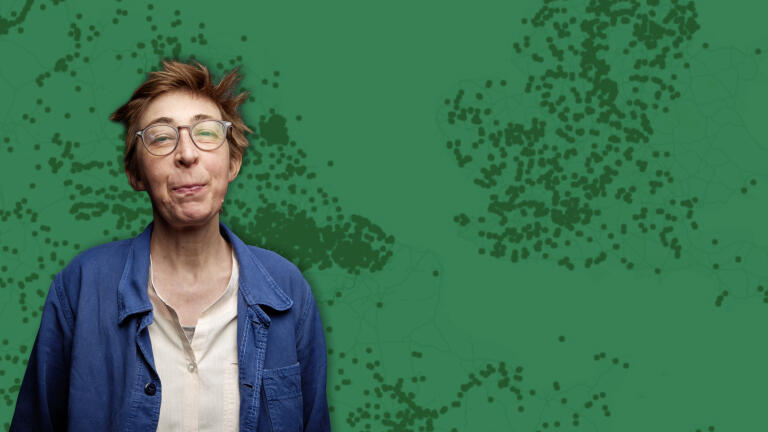
Thanks for having me; it's a pleasure to explain our work to different circles than our usual audience. So, the Forever Pollution Project was born in 2022 out of a single idea: can we map of PFAS manufacturing facilities in Europe? Because, at that time, nobody had a clue where they were, apart from a few epicentres of PFAS pollution. So, this is how we started and then, it got a little bit out of control in terms of ambition. We started mapping actual contamination by collecting existing data from the scientific teams, regulatory and environmental agencies across Europe. By adapting US methodology, we decided to put out a map of likely-contaminated sites, or what we call ‘presumptive contamination’. In February 2023, we published this map, which had a huge impact, showing with red and blue dots the extent of contamination by PFAS in Europe with over 23 contamination sites and over 21,500 presumptive contamination sites. We said this was likely to be an under-estimation, and we know today that it was. With this project we made invisible the visible. The PFAS issue was almost completely unknown to the public three years ago.
The second part of the project, which we published in January 2025, was called the Forever Lobbying Project. We took a look at the arguments given by the industry themselves against what we call ‘universal restrictions’ - that's a ban of the whole chemical family of PFAS across Europe. Then, we tried to give some substance to the stakes of not pursuing such restrictions by calculating the cost of Europe-wide remediation. We came up with a figure of €100bn a year, rising to €2trn over 20 years if nothing is done to stop emissions.
And are there any plans in the future to develop the project?
Well, somehow, we have become like a virtual newsroom. It's a cross-border project. Everybody has heard about other cross-border investigative projects, like the Panama Papers. We're not as many journalists as that but we were 30 journalists on the first part of the project and 45 on the second, with the experts that we embedded. We call this way of working ‘expert-reviewed journalism’ because we included scientific and technical experts, not as full team members but committed to the project to provide us with high-quality information. It's a real collective effort, really collective intelligence. As a result, somehow, I'm now leading a newsroom of people who got hooked on the topic, and we might be becoming something more permanent - maybe even something as persistent as PFAS!
When it comes to collecting data, did you say you're using data that's already been collected by other monitoring projects or is your organisation directly monitoring PFAS?
We've never done sampling ourselves as we didn't have the resources. We started with a very standard scientific literature review, asking: where could we find some actual data? We were surprised to find a lot of data, actually.
The other surprise was that a lot of scientists were really happy to share that data, because they had been looking for funding to do something like this for years. We ended doing the work that a lot of academic researchers had wanted but lacked have the resources to do.
Are you finding now that more research into PFAS is being funded as a result of the Project’s work?
Definitely. PFAS has emerged as a major topic. Many scientists regard it to be the worst pollution crisis that humanity has ever faced. It's not like there’s loads and loads of money going into it but it's easier to get funding to study PFAS than, say, PBDs or PCOS right now.
How would you like to see the tracking of PFAS in Europe develop over the next five to ten years?
There were lots of missing areas on our map and we have to repeat that just because we don’t have any data for certain places that nothing is happening there. And on the opposite side, just because we had all of this data for other places, lots of red dots, that they are the most contaminated sites. There's data missing for many, many places. In some countries, there's absolutely no data, even though we know that PFAS are absolutely everywhere.
Our work, but not only our work, there are countries that have been driving this push for universal restriction at EU level. All of these investigations have interest in new regulatory frameworks. Monitoring PFAS in water is mandatory in France as of 1st January. Data is flooding now. So, I would hope to see that in one year’s time we will have a much better idea of the actual extent of the pollution.
With regard to the regulation of PFAS in Europe, what do you perceive as being the challenge that current regulation faces? How would you like to see it change in order to actually capture the scale of PFAS contamination?
Well, that's the key question, right? So, four EU member-states and Norway came up with a proposal for a universal restriction in early 2023. They came up with this proposal because the industry has been looking for alternatives to conventional PFAS since the late 1990s-early 2000s, when it became clear that these were very persistent and toxic chemicals. They decided to replace them by chemicals of the same family; what we call now a ‘regrettable substitution’. The universal restriction aims to save public authorities from being caught up in a whack-a-mole pursuit of different PFAS. We started off with PFOS and PFOA but now, we have over 12,000 PFAS, which is a pure nightmare because there's absolutely no way for the authorities to monitor such a proliferation of novel substances.
From what I understand, the scientific community thought it was a good proposal, pretty realistic. It allowed time in the case of those compounds for which there is no alternative yet. But the problem is that there's been a lobbying campaign and the proposal has been drastically watered down. In terms of public health and costs, though, the longer we keep emitting PFAS, the more expensive this will be to fix.
But in general, do you think the EU Commission and member-states are taking PFAS restriction more seriously? Is stronger regulation on the horizon?
I think that some member-states don't share the Commission’s position. Certainly, those member-states that worked on the universal restriction do not agree fully with the direction that is being taken by the Commission. Recently, in a few countries, some initiatives came into force, around cosmetics, textiles, pharmaceuticals and pesticides.
In your research and your reporting, have you found that there are sources of PFAS that we are under-monitoring?
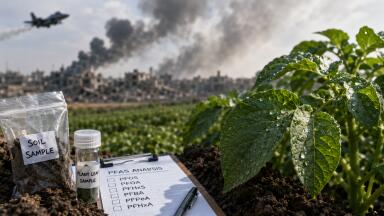
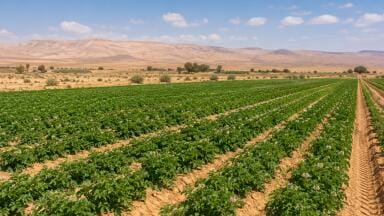
That's a very good question. I think the major unknown today is how much PFAS is in the sewage sludge used in agriculture. We're basically contaminating the soils and the crops, adding to the PFAS in pesticide residue – indeed, it has almost totally escaped the attention of many people that industry has found a way to add PFAS to pesticides. Spraying pesticides is already a problem in terms of potential contamination of nearby water resources and exposing those people in proximate areas as well as those who apply the products. So, spraying PFAS and pesticides at the same time is certainly not the best idea humanity has ever had.
Are there any regulations at the moment to limit how much PFAS goes into sewage sludge? Or is there any regulation on the horizon to stop that?
We're still at the very beginning of the awareness of this issue. There were stories in the New York Times here about the US situation that were really, really scary, and journalistic investigations in Switzerland. But no, nothing in France, nothing in the UK, nothing in Germany.
There’s a place where sludge from paper mills was used as fertilisers and was heavily contaminated because food packaging made in paper mills is coated with PFAS. This sludge was sprayed over huge areas and the municipality doesn't have enough money to remediate - if I remember correctly, it's over €2bn to remediate. The farmers can't use their soil anymore, can't grow anything there, can't cattle there. This contamination has reached the groundwater and it’s going to the Rhine, which some have claimed is good news because it's going to be diluted in river. But something tells me that the Dutch people will not be very happy to get this at their end of the Rhine.

Finally, is there anything you'd like to say about the collaboration between environmental monitoring professionals and journalists? Do you think that with PFAS, when like you said, the regulations aren't necessarily always there, is there more room for this sort of collaboration in the future between your two professions?
Well, we've worked a lot with monitoring professionals. I mentioned earlier this methodology that we developed called ‘expert-reviewed journalism’ and we’ve found that always a win-win for both parties. For us journalists, we get a better quality of information and it’s easier to produce work that can’t be discarded. And on the other side, these collaborations allow scientists to collect data and generate new knowledge. You know, sampling is very expensive. I would have a hard time convincing my editor to set aside €50,000 just to investigate the possibility of contamination. But if there's a way to collaborate as part of a research project that is both academic and journalistic, some interesting work could be generated. This way of working together is really a new way to do environmental journalism, I think.
IET 36.3 May

 Product directory










.jpg)



.jpg)
.jpg)
.jpg)
.jpg)




2.jpg)