Leak detection
Published over 7 years ago. See the latest and most current information on Leak detection.
Figaro Engineering Inc., is pleased to introduce its refrigerant gas sensor TGS2630 and a new pre-calibrated gas sensor module FCM2630 for A2L refrigerant leak detection.
TGS2630 has high sensitivity to low-GWP A2Ls, "Lower Flammable Refrigerants", such as R-32 and R-1234yf. The TGS2630 is also sensitive to R-404a and R-410a which are commonly used in air conditioning and refrigeration systems. TGS2630 has a built-in filter to reduce the influence of alcohol and other interference gases, resulting in high selectivity to A2L refrigerants. This feature makes the sensor ideal for stationary type A2L refrigerant leak detectors which require long term durability and resistance against interference gases.
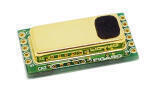
Using the TGS2630, FCM2630 is a small sensor module that is pre-calibrated for the detection of R-32. This module can be easily built into HVAC-R systems, eliminating the need for HVAC-R system manufacturers to calibrate as well as perform electronic circuit design for temperature compensation. In addition, a connector allows easy replacement of the gas sensor module for periodic maintenance. FCM2630 is capable of satisfying the performance requirements of the JRA4068:2016 standard (Performance 3) established by the Japan Refrigeration and Air Conditioning Industry Association.
IET Guide 2026

 Product directory