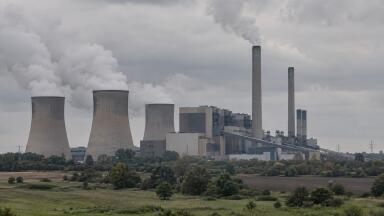
Industrial emissions
But new research suggests another, less visible pathway may be adding to agriculture’s climate footprint.
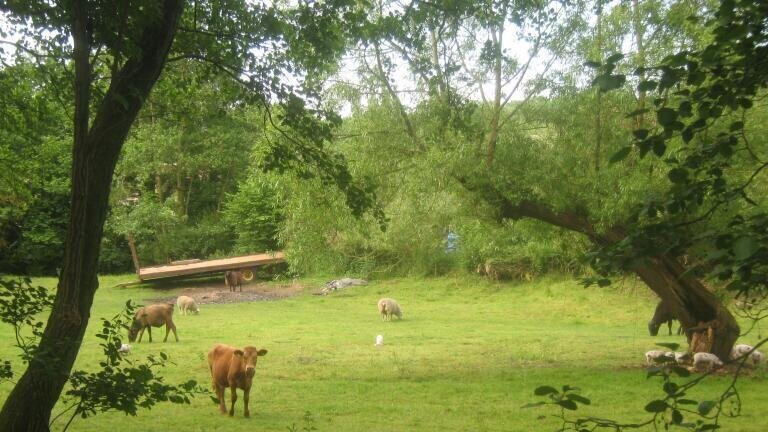
Ammonia released from intensive pig farms can trigger microbial processes in surrounding soils that generate nitrous oxide (N₂O), potentially creating greenhouse gas emissions beyond the boundaries of the farm itself.
The findings come from a study published in Nitrogen Cycling by researchers at the Chinese Academy of Sciences. Through a combination of field monitoring, laboratory experiments and molecular analysis of nitrogen-cycle microbes, the team investigated how ammonia (NH₃) released from an intensive pig farm affects soil nitrogen dynamics in nearby ecosystems.
Ammonia is not itself a greenhouse gas but it plays an important role in the global nitrogen cycle. Livestock production is the world’s largest anthropogenic source of ammonia emissions, responsible for nearly half of agricultural NH₃ releases globally. Once emitted into the atmosphere, ammonia can travel short distances before depositing onto soils, where it becomes available for microbial transformation.
The study shows that this deposition can stimulate nitrification – a microbial process that converts ammonium into nitrate – producing nitrous oxide as a by-product. N₂O is a particularly potent greenhouse gas, with a global warming potential roughly 298 times greater than carbon dioxide over a 100-year period, and it also contributes to stratospheric ozone depletion.
To understand how this process unfolds around livestock facilities, the researchers conducted soil monitoring along two transects extending 50–500 metres from a pig farm in south-central China. Soil samples were analysed for ammonium (NH₄⁺-N), nitrate (NO₃⁻-N) and nitrous oxide fluxes over time.
The results showed clear evidence that ammonia deposition was influencing local soil chemistry. Ammonium concentrations were consistently higher than nitrate concentrations near the farm, suggesting a strong influx of atmospheric nitrogen. At the same time, soils acted predominantly as net sources of nitrous oxide, with emissions generally decreasing as distance from the farm increased.
Daily N₂O fluxes averaged around 1.2 g N ha⁻¹ per day along one transect and 0.8 g N ha⁻¹ per day along the other. When scaled up over the monitoring area, the researchers estimated that annual soil emissions reached 69.7 kg N per year within 500 metres of the farm.
Importantly, these emissions appear to represent a measurable “secondary” source of greenhouse gases. The study estimated that around 1.3% of deposited ammonia-nitrogen was ultimately converted into nitrous oxide – exceeding the default emission factor used by the Intergovernmental Panel on Climate Change (IPCC) for similar processes.
Laboratory incubation experiments helped clarify the mechanisms involved. Soil samples amended with different nitrogen sources and moisture conditions showed rapid N₂O release during the first few days of incubation, with emissions highest when soils contained urea and higher moisture levels. These results suggest that both nitrogen availability and soil water content play important roles in controlling nitrification-driven N₂O production.
Molecular analysis of nitrogen-cycle genes revealed that ammonia-oxidising archaea (AOA) were the dominant microbes driving nitrification near the farm. The abundance of AOA-associated amoA genes declined with increasing distance from the facility, reinforcing the link between ammonia deposition and microbial activity in surrounding soils.
For environmental monitoring professionals, the findings highlight an important measurement challenge. Livestock emissions monitoring typically focuses on gases released directly from facilities, such as methane from manure storage or nitrous oxide generated within barns and lagoons. However, if ammonia emissions are triggering additional greenhouse gas production in nearby soils, a portion of the climate impact may occur outside the areas typically monitored.
This raises questions about whether current monitoring approaches fully capture the agricultural nitrogen cascade, in which emitted ammonia is transported, deposited and transformed into other reactive nitrogen compounds. Capturing this cascade requires measurements across multiple stages, including atmospheric ammonia concentrations, deposition patterns, soil nitrogen dynamics and nitrous oxide fluxes.
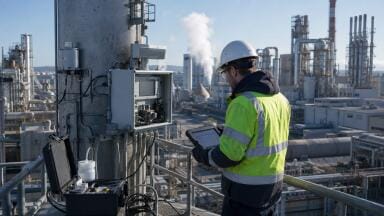
Advances in environmental sensing could help address this gap. Open-path ammonia sensors, passive deposition samplers, automated soil flux chambers and eddy covariance systems are increasingly being deployed to study nitrogen cycling in agricultural landscapes. Integrating these measurements could provide a more complete picture of how livestock emissions interact with surrounding ecosystems.
The research also reinforces the importance of ammonia mitigation technologies. Strategies such as improved manure management, dietary nitrogen optimisation, barn air scrubbers and ammonia capture systems are already being explored to reduce NH₃ emissions from intensive livestock operations. Monitoring technologies will play a critical role in verifying the effectiveness of these approaches and assessing their wider climate benefits.
As global agriculture faces growing pressure to reduce greenhouse gas emissions, studies like this suggest that part of the challenge may lie beyond the farm gate. Ammonia released from livestock facilities does not simply dissipate in the atmosphere; it can set off a chain of microbial transformations in surrounding soils that generate additional greenhouse gases.
Understanding and monitoring this hidden pathway could become increasingly important as regulators and researchers seek to account for the full climate impact of agricultural nitrogen pollution.
IET 36.5 Sept/Oct 2026


 Product directory



.jpg)











.jpg)




.jpg)
.jpg)