Gas sensors
Published over 17 years ago. See the latest and most current information on Gas sensors.
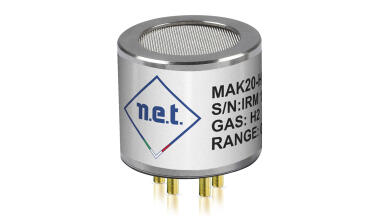
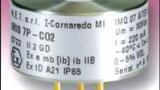
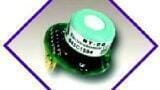
Incorporating innovative patent-pending optics, the new IR sensor series from N.E.T. (Italy) comprises a standard sensor, IRIS-7, including optics and intrinsically safe (IS) circuitry with a 7 pin output, and IRIS-P, an intelligent sensor containing all the necessary integrated electronics, IS interface and software to provide user friendly analogue voltage outputs.
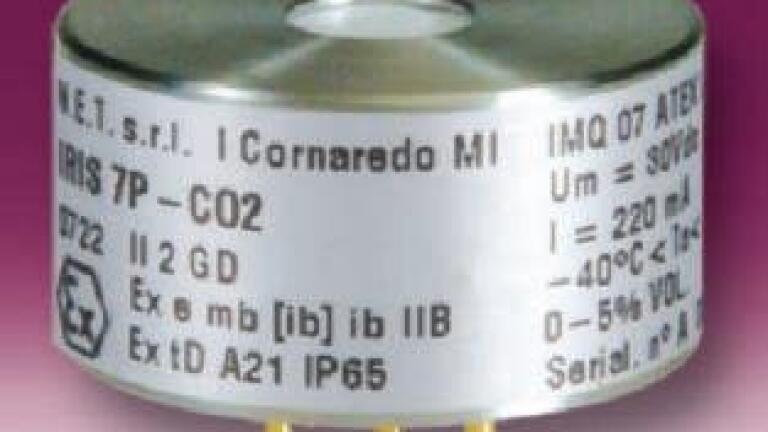
Designed especially for the fixed apparatus, the standard 32 mm size (typical 7-series) with a patent cavity allows to meet the 60079-29-1 Standard in terms of performance. The IRIS-P hardware has been developed to comply with SIL specifications up to level 2 and SIL 3 for the software. Both the sensors IRIS-7 and IRIS-P are available for hydrocarbons, including methane, in % LEL and % vol and for CO2 with detection level in ppm, low % vol and high % vol. They have been designed and certified to be used in potentially explosive atmospheres classified as zone 1, 2, 21 and 22 together with an appropriately certified interface/enclosure. The protection level applied on the IRIS series is: Group II; Category 2GD; Protection for flammable gases: Ex e mb [ib] ib IIB; Protection for dust: Ex tD A21 IP65. The sensors are certified as components according to the essential and health safety requirements of the Directive 94/9/EC ATEX.
IET Guide 2026

 Product directory