Gas detection
Published over 17 years ago. See the latest and most current information on Gas detection.
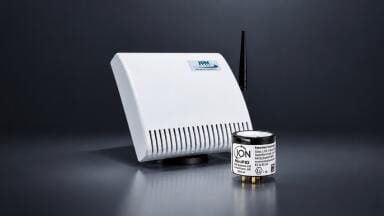
A recent evaluation was conducted to compare a PID cell incorporating Fence Electrode Technology against one equipped with Humidity Compensation. Test results prove that an Ion Science PID with Fence Electrode Technology is twice as accurate, more stable and faster than a PID with Humidity Compensation.
The published data shows that when subjected to high humidity, an Ion Science PID with Fence Electrode Technology is much less subject to drift, while responding and clearing out faster, resulting in much fewer non-reports. The comparison between the two leading PID instruments clearly shows that the Ion Science PID technology performs far better than its closest competitor.
For a copy of the published data ‘An Evaluation of Competing Technologies’, please contact Ion Science on +44 (0)1763 207206 or by email: [email protected] or visit our website: www.ionscience.com
IET 36.5 Sept/Oct 2026


 Product directory



.jpg)
















.jpg)