Gas detection
Published over 18 years ago. See the latest and most current information on Gas detection.
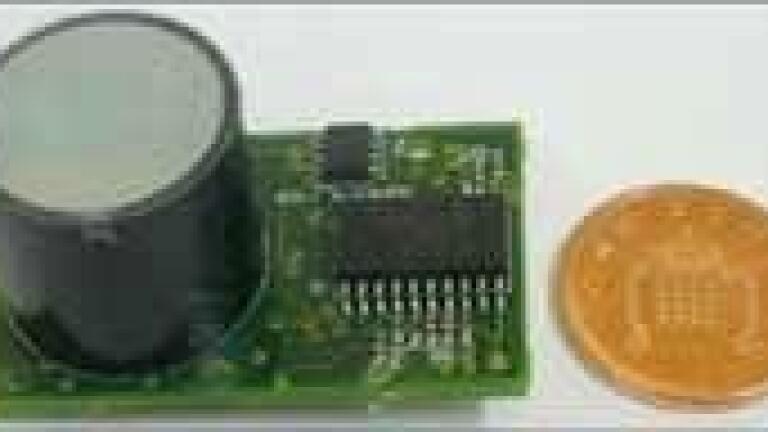
Gas Sensing Solutions (UK) has developed an innovative High Speed, Real Time, Low Cost, Precision gas sensor using Al-In-Sb (Indium Aluminium Antimonde) NDIR LED technology. The base Mid IR solid state technology which is sourced from QinetiQ has now been commercialised by GSS into a unique CO2 sensor. GSS has secured an exclusive License from QinetiQ
to exploit the technology for Carbon Dioxide Sensor applications.
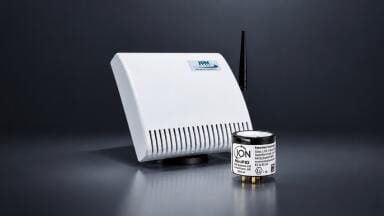
The sensor is easy to use. The standard model provides a TTL level serial output, with a temperature compensated linearised reading. Leading edge LED technology allows the sensor to run at low power – less than 100mW running at full speed. No signal processing is required – just plug it in, power it up and read the data. (Other output options are available on request). GSS works with customers of all sizes – from low volume to high volume. We are always happy to discuss the right solution for specific applications.
The Carbon Dioxide measured output is temperature compensated and linearised. This new solid state NDIR technology employs an LED and a matched Photodiode manufactured to operate within a narrow optical band centred on 4.26m. LED’s by nature are stable long life light emitters. The optical housing employs a simple but efficient optical path that collects the emitted radiation on the photodiode. Interfacing electronics can also be constructed to suit the customer’s OEM specification.
IET 36.5 Sept/Oct 2026


 Product directory




.jpg)















.jpg)
.jpg)