Food safety testing
Published over 16 years ago. See the latest and most current information on Food safety testing.
Agilent Technologies (Asia) and the National Center for Food Safety and Technology (NCFST) announce that they have entered into a collaboration to develop new scientific methods for food testing, with the goal of solving a wide range of persistent problems facing global food supply chains.
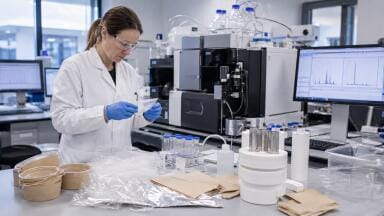
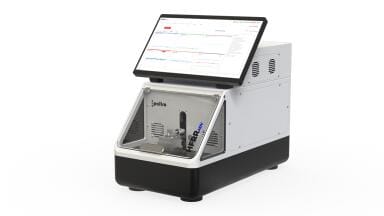
As part of the collaboration, Agilent will equip the NCFST lab with an extensive assortment of the latest analytical chemistry and life science instrumentation.
In addition to the instrumentation, scientists from Agilent’s food industry group will provide training and applications support, and service engineers from Agilent’s Chicago office will support the instruments.
"This is an opportunity to positively impact many peoples’ lives by giving researchers better ways of analyzing food-borne illnesses and food quality on a significant scale," said Mike McMullen, president, Agilent Chemical Analysis Group. "We’re putting powerful analytical and biological tools into the hands of some very bright scientists from academia, industry and government, where their combined perspectives should produce creative solutions."
"The state-of-the-art technology provided by Agilent will allow NCFST greater capability to study chemical compounds of critical concern to the global food industry and regulatory authorities," said Jack Cappozzo, director, chemistry, NCFST. "Compounds include melamine; aflatoxins; pesticides; antibiotic residues, such as flunixin and clenbuterol; and Clostridium botulinum toxin.
"This collaborative effort will not only advance analytical solutions that help us better understand and mitigate emerging chemical contaminant issues in food, but also provides us with solid, science-based knowledge to make informed decisions that help ensure a safer, more secure food supply and improve public health."
IET 36.5 Sept/Oct 2026



 Product directory