CEMS
Published over 16 years ago. See the latest and most current information on CEMS.
The recent rise in approvals for the construction of renewable energy plants burning biomass has highlighted the need for specified monitoring equipment to be both cost-effective and flexible. Quantitech Director Dominic Duggan explains: “Whilst biomass power represents an important part of the Government’s strategy to produce energy from renewable sources and to reduce waste to landfill, a debate on the role of such facilities in climate change continues. It is therefore important for monitoring systems to be ’future proof’ – to be able to measure new parameters in subsequent years, such as greenhouse gases.”
The choice of analyser is often dictated by the number of parameters specified in a site’s emissions permit. However, Duggan believes that future monitoring requirements should be taken into consideration, adding, “We have seen a number of biomass projects for which only a small number of parameters have been specified in the emissions permit and this may lead process operators to choose individual analysers for each parameter since that may appear to be the lowest cost option. However, saving small costs in the short term could prove expensive in the medium to long term, particularly since the cost of monitoring equipment is a tiny fraction of the overall budget for a new plant. There are two important issues that should be taken into account.
“Firstly, as time passes, monitoring requirements change and this often involves an additional requirement for new parameters. Secondly, FTIR is the most commonly employed multiparameter technology in the CEMS (Continuous Emission Monitoring System) market, but may be considered prohibitively expensive for biomass incineration. However, Gasmet (a world leading manufacturer of FTIR) has developed an insitu FTIR that represents a cost effective solution to the need for accurate but flexible multiparameter analysis.”
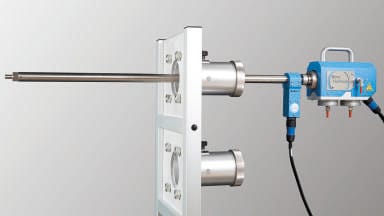
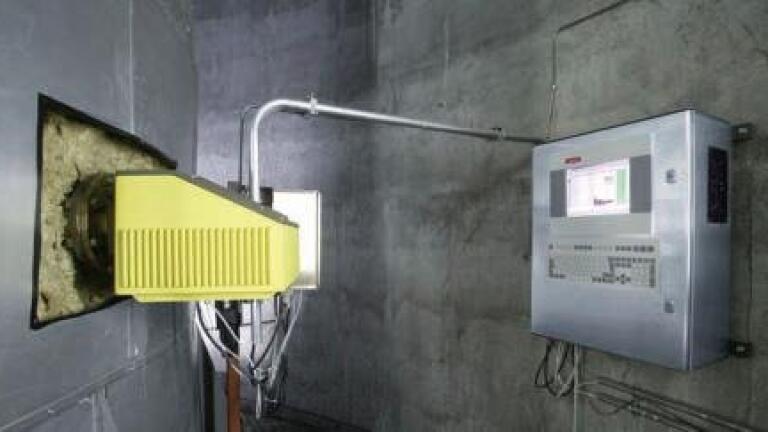
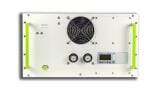
The Gasmet™ In-Situ offers an alternative to extractive systems in continuous emissions and process monitoring where multiple compounds are monitored. Typically, concentrations of H2O, CO2, CO, NO, NO2, N2O, SO2, HCl, HF, NH3, CH4 are continuously monitored with a single Gasmet™ In-Situ. In addition, different VOC’s can be measured as individual compounds. There is no need for any span calibrations; only zero calibration with instrument air every 24 hours, so Gasmet claims that the instrument is extremely easy to run.
The Gasmet™ In-Situ has already been employed in biomass and energy from waste plants burning such materials as municipal waste, wood chip, tree bark, peat, coal, heavy fuel oil, short fibre and sludge from paper mills.
Summarising his recommendations on the suitability of insitu FTIR for biomass incinerators, Duggan says, “The greatest advantage of this technique is that the basis of every measurement is a complete spectral analysis of the emission gas. This means that whilst the instrument is able to calculate concentrations of the required parameters, it is also able to analyse new parameters at any time and at no extra cost.”
IET 36.5 Sept/Oct 2026




 Product directory

















.jpg)