Ambient air quality
Published over 11 years ago. See the latest and most current information on Ambient air quality.
Gasera has recently entered into a long-term product development and supply agreement with an un-named US-based company. This company is an industry leader in the design and production of precision measurement instruments serving the global market by investigating, identifying and solving measurement problems.
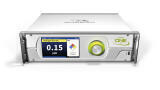
In this collaboration, Gasera’s disruptive patented technology and instrument concept provides the measurement module for ambient gas pollutants with unmatched performance with fraction of the cost of current solutions.
“Air pollution is a serious threat to humans. Partnering up with the global leader in this field allows Gasera to enter this market and participate in solving the global pollution problem,” says Ismo Kauppinen.
As a measurement principle, the Gasera's concept relies on a century old phenomenon of Photoacoustic Spectroscopy (PAS). During the last decades, photoacoustics has been proven to be a potential solution for sensitive and reliable measurement principle with high selectivity over wide dynamic range in quantitative gas analysis, common characteristics valuable from lab instruments all the way to future hand-held instruments. What Gasera brings more to PAS, is the patented MEMS fabricated cantilever pressure sensor coupled with an optical readout interferometer. This invention overcomes the electrical noise limitation from conventional microphone technology improving the sensitivity of conventional photoacoustics by a factor of 100, ultimately limited by the brownian noise i.e. random motion of gas molecules.
There is a fast growing need for reliable quantitative analysis of multiple pollutants and air toxins in several ambient air monitoring applications such as industrial fence-line air monitoring. Gasera’s technology answers the need for selective simultaneous multi-gas measurement with low detection limits and long maintenance period at a market acceptable price point.
IET Guide 2026

 Product directory