Air sensors
Published over 12 years ago. See the latest and most current information on Air sensors.
In simple terms, a pellistor gas sensor is a solid state device designed to detect combustible gases. It’s also used to detect gases that significantly differ in thermal conductivity to the surrounding air. Thanks to their predisposition to change resistance when exposed to certain vapours, compact catalyst-loaded ceramic pellets are used in the detection process. The fusion of ‘pellets’ and ‘resistor’ is where the term ‘pellistor’ comes from – ingenious!
There are two types of pellistor contraptions used to detect gases - Catalytic and Thermal Conductivity (TC).
This is the most common form of pellistor sensor which actively burns target gases to produce additional heat. In turn, this initiates a change in the resistance of the ceramic pellets which can be used to determine concentration of a target gas.
Like its Catalytic counterparts, Thermal Conductivity sensors use changes in heat to detect target gases. Although rather than actively generating heat, TC sensors measure changes in heat loss and use these to identify the presence of certain gasses.
It may sound complicated, but the gas detection process is actually quite simple. Pellistors are stored in flameproof housing which is bordered by a gas permeable membrane. Pellistors raise the alarm when gas diffuses through the permeable membrane and creates an exothermic reaction. This reaction is due to the fact that the maximum concentration of flammable gas has been exceeded. This is more commonly referred to as the Lower Explosion Limit (LEL) and varies between different substances.
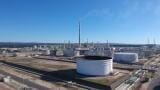
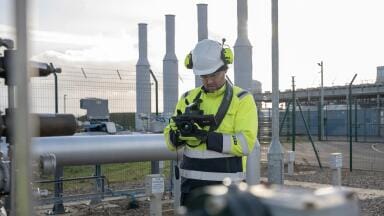
Pellistor gas sensors first made an appearance in the 1960s thanks to British scientist and inventor, Alan Baker. The concept was put forward as a solution to the long-running flame safety lamp and canary techniques. The sensors are highly reliable and are capable of detecting almost 100% of combustible gases that fall within their explosive range. Today, pellistor gas sensors are still used as an effective way to detect combustible gases in a range of potentially explosive environments. These include industrial applications such as mines, oil refineries and oil rigs.
While pellistor gas sensors are incredibly useful, they are still liable to fall victim to a number of risks. Poisoning is one of the most common dangers wherein compounds begin to decompose on the catalyst to form a dense barrier. Common poisons include silicon and organic lead. Decomposition of these compounds reduces the sensitivity of the catalyst and hinders its ability to detect target gases. Inhibition is another risk which sees catalysts absorb compounds such as halogenated hydrocarbons and hydrogen sulphide. This can block a catalyst’s reaction sites and impede its capacity to display resistance.
For more information about pellistor gas sensors, read this article: The Pellistor is Dead? Long Live the Pellistor! In this article, we take a closer look at the history and future of the pellistor and explain why there is still plenty of life left in this technology.
IET Guide 2026

 Product directory