Air monitoring
Accurately quantifying fugitive methane emissions is critical for oil and gas operators under growing environmental and regulatory pressure. Conventional detection systems often struggle in hazardous environments, where safety certification and reliable performance are crucial.
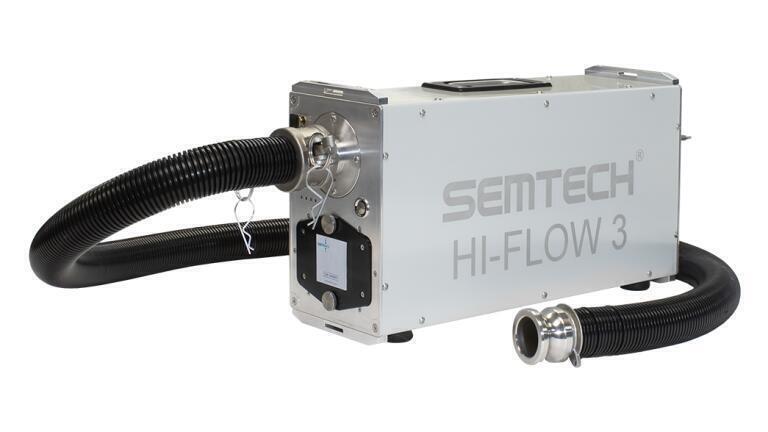
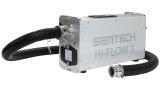
The new SEMTECH® HI-FLOW 3 from Sensors Inc. is engineered specifically for ATEX Zone 1 applications, bringing industry-leading precision to the field. Building on the success of HI-FLOW 2, this next-generation portable analyser combines spectroscopy-based methane sensors with a high-output sampling fan, delivering flow rates of up to 500 LPM. The system achieves minimum leak detection down to 0.025 LPM (≈1 g/hr), while accommodating significantly higher maximum leak rates than comparable instruments.
At its core, a state-of-the-art Tunable Diode Laser Absorption Spectroscopy (TDLAS) sensor ensures methane-specific measurements, thereby eliminating interference from other gases present across upstream, midstream and downstream operations. Compact, battery powered and extremely rugged, HI-FLOW 3 offers end users at oil and gas plants and refineries the accuracy and certification needed to meet today’s methane monitoring challenges.
To learn more about what Sensors Inc. has to offer, click here.
IET 36.5 Sept/Oct 2026


 Product directory




.jpg)













.jpg)