Air monitoring
Published over 11 years ago. See the latest and most current information on Air monitoring.
To ensure people’s safety and a good repeatability of industrial process, Chromatotec (France) has developed monitoring systems to control Airborne Molecular Contaminations (AMC) present in ambient air. Electronic boards are produced in clean air rooms by complex lithographic processes using very reactive chemicals. It is universally known that particle control is an essential part of the semiconductor fabrication process. Clean room technology, which relies on the use of HEPA and ULPA filtration, has in the past almost exclusively focused on the control of micro- and nano-particles. Nevertheless, as a consequence of device reduction, AMCs have also become a key detractor of yield.
The nature and concentration of AMCs can be different depending on the chemical process and can also vary rapidly. These AMCs can impact the process and reduce the lifetime of equipments. Among the AMCs, silicon compounds are very problematic because they combine with oxygen to create amorphous silicon dioxide on optical surfaces, leading to non reversible lens damages. These optical tools are very expensive and need to be protected. Therefore, there is a need to precisely and continuously analyse gas process in air with an instrument designed for industrial use.
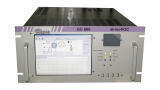
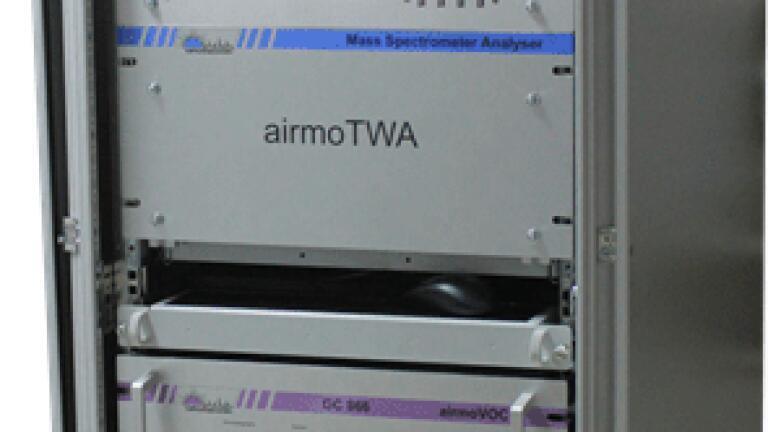
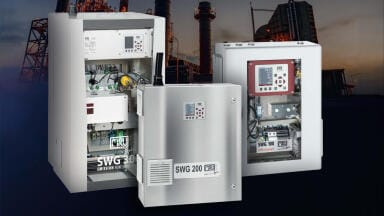
Chromatotec has developed a turnkey solution which allows the quantification and identification of compounds at ppt, ppb, ppm and % levels. The airmoTWA encompasses a specific trap to concentrate the sample, a column for separation of chemicals and two detectors: a new micro flame ionisation detector (FID) and a mass spectrometer for quantification and identification respectively. This user-friendly instrument monitors automatically all AMCs and allows increasing production efficiency filters and lenses lifetime.
IET Guide 2026

 Product directory


















.jpg)

.jpg)