Water/wastewater
Published over 12 years ago. See the latest and most current information on Water/wastewater.
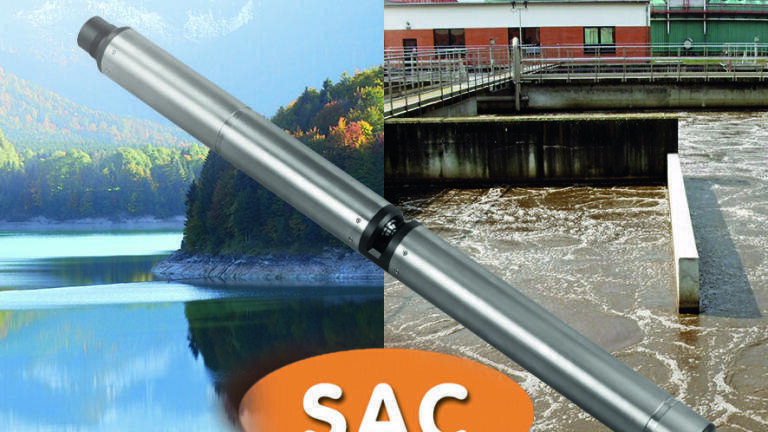
The spectral absorption coefficient (SAC) at 254 nm is a sum parameter that serves as a measure for the organic load of water similar to COD.
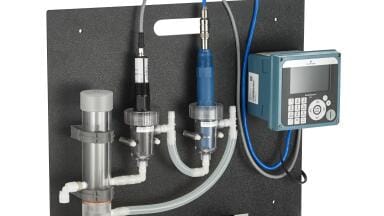
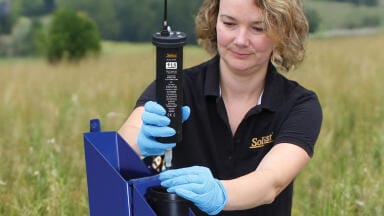
The new sensor UV 700 IQ SAC, from WTW Xylem (Germany), allows the user to detect this parameter directly and without the need to add any chemicals. Time consuming and expensive sample-taking and sample-preparation, as well as the use of reagents, are no longer needed due to the optical measurement directly in the medium. Wear of parts and maintenance are no issues thanks to the integrated WTW ultrasonic cleaning system. The used materials Titanium and PEEK guarantee an extreme durability even in corrosive media.
Typical applications of the UV 700 IQ SAC sensor are the detection of changes in loads. Influent and effluent of wastewater treatment plants as well as organic loads in rivers and lakes can be monitored.
The new sensor can be integrated directly into existing or new IQ Sensor Net systems, with the following advantages: flexibility, modularity, security and a simple parameter extension.
Your advantages at a glance: Optical measurement – no chemical reagents required, SAC and UVT measurement (254 nm), Measurement directly in the medium, Maintenance-free WTW ultrasonic cleaning system, No wear parts and Extremely robust thanks to Titanium and PEEK materials.
IET 36.5 Sept/Oct 2026





 Product directory