Water/wastewater
Published over 16 years ago. See the latest and most current information on Water/wastewater.
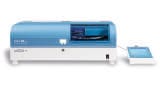
Use of Dionex Reagent-Free™ ion chromatography (RFIC™) systems with eluent generation (EG) and eluent regeneration (ER) technology (RFIC-EG™ and RFIC-ER systems) is compliant with the newly released International Organisation for Standards (ISO) water quality standard. The new standard for anion analysis by ion chromatography, titled Water Quality—Determination of Dissolved Anions by Liquid Chromatography of Ions—Part 1: Determination of Bromide, Chloride, Fluoride, Nitrate, Nitrite, Phosphate and Sulfate (ISO 10304-1:2007), replaces earlier standards ISO 10304- 1:1995-04 and ISO 10304-2:1996-11.
The new standard combines the earlier standards into one, removing the differentiation between simple and difficult sample matrices. EG enables the use of gradient techniques without the need for manual eluent preparation. ER reduces operational costs by providing the user with the ability to operate an ion chromatograph continuously for a month without changing the eluent, and improves throughput by reducing equilibration and calibration time.
IET 36.5 Sept/Oct 2026

 Product directory



.jpg)









.jpg)






.jpg)