Environmental laboratory
Published over 5 years ago. See the latest and most current information on Environmental laboratory.
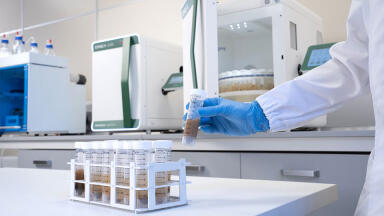
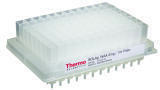
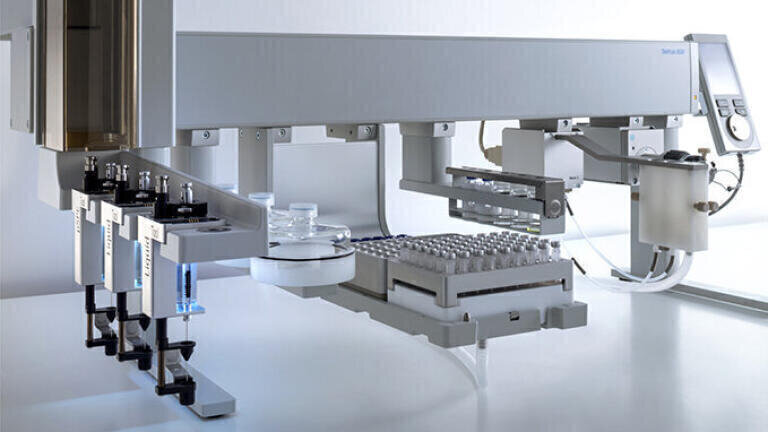
See how Thermo Scientific’s automated µSPE (micro Solid PhaseExtraction) on their TriPlus™ RSH Autosampler enables scientists to gainreliable, high throughput operations for GC-MS analysis of pesticides in a wide variety of food matrices, even those with high lipid contents.
Key benefits of replacing manual clean-up procedures with a fully automated on-line approach is theefficiency of the QuEChERS (quick, easy, cheap, effective, rugged, and safe) extraction while offeringthe benefits of eliminating human errors and scaling down sample volume and solvent consumption.
Other key benefits of automated online µSPE include:Lower % RSDs and higher % recoveries comparedwith manual d-SPE, leading to more reliable quantitation of targets analytes,More efficient removal ofmatrix co-extractives for higher selectivity and sensitivity,Improved robustness as demonstrated by%RSDs lower than 10% during the LC-MS/MS analysis of 200 consecutive injections of teaextracts,Unattended operation and time savings compared to manual d-SPE,Improved productivity with a decrease in system maintenance and increased instrument uptime,excellent results even with entry-level triple quadrupole MS systems and finally unified clean-up operations for improved efficiency inroutine testing laboratories.
IET 36.5 Sept/Oct 2026

 Product directory



.jpg)