‘Hard’ chemistry from 30 years ago belongs definitively to the past! Fortunately, working in a laboratory has becoming more and more user and environment friendly. The pH measurement has always been a nontoxic method. But what about the cleaning and regeneration of pH electrodes? Are you still using a toxic and dangerous etching method? With the ‘pHit kit’, from Metrohm (Switzerland) toxicity belongs to the past! The new ‘pHit kit’ contains all what you need to clean or regenerate your electrode in the most gentle way.
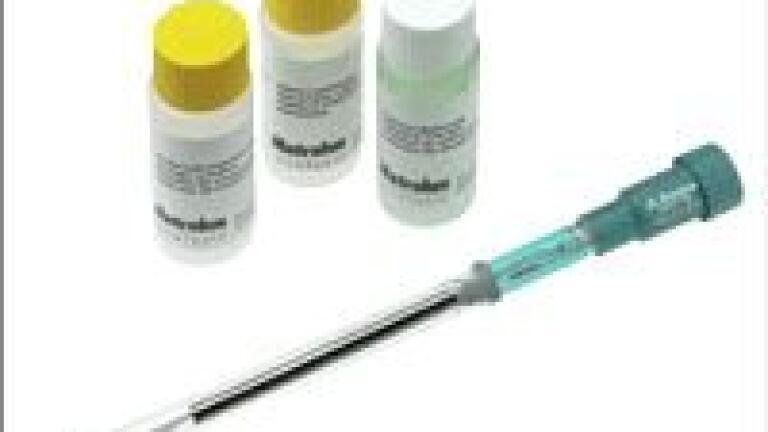
The ‘pHit kit’ box contains:
• an extensive description of every step
• a cleaning solution
• a c(KCl)= 3 mol/L electrolyte solution
• a storage solution
• 2 electrode vessels
• an carton inlet to let your electrode stands during cleaning and conditioning
The ‘pHit kit’ can be used wherever you are: in the laboratory or in an external location. It can be successfully used by everybody: no need of any special skills.
The ‘pHit kit’ is THE cleaning tool for each user who cares about precise measurement, safety and environment.
Even the packaging is environment friendly: packed in a carton box, it can be totally recycled! Do something good to your pH electrodes and the environment: buy a ‘pHit kit’.


 Product directory























.jpg)