Water/wastewater
Published over 7 years ago. See the latest and most current information on Water/wastewater.
Leaks in water pipe networks can result in significant water losses. Thanks to systematic monitoring of the network with Herman Sewerin’s SePem® data loggers, you can reliably identify existing leaks and catch new ones early on – much faster than with conventional methods.
In relation to the size of a measuring area, the volume of water initially escaping from a new leak is usually so low that it cannot be clearly distinguished from minimum night-time consumption when measuring the flow. In practice, many months often go by before the size of the damage is great enough to produce a flow volume that can clearly be identified as a leak. SEWERIN’s SePem® 100/150 can report the leak after just one night.
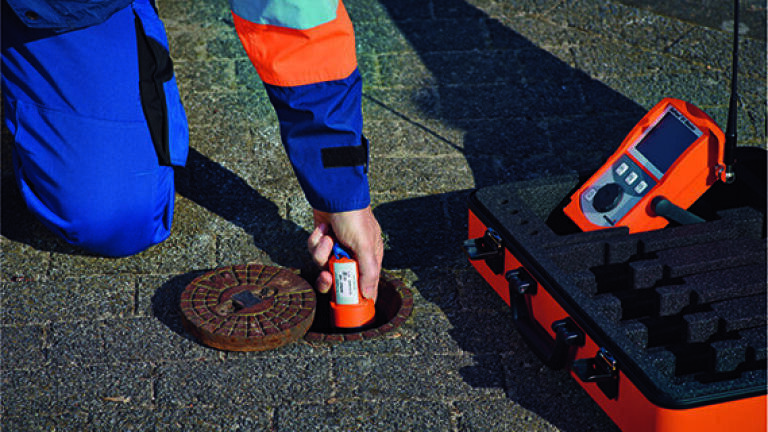
The SePem® 100 data loggers with integrated aerial are perfect for mobile use in the water pipe network. They are placed on fittings at measuring points in a specified section of network and record the level for a programmable period of time during the night – usually half an hour. The loggers are collected in the next day. The measurement data is transmitted to the SePem® 01 Master by radio. Noticeably high measurement values indicating a leak are immediately flagged up by an audible signal. This is a reliable way of detecting existing leaks. The data loggers are then successively inserted in other sections of the network until the whole network has been checked.
The SePem® 150 data loggers are designed for the stationary monitoring of water supply networks. They have an external aerial and are permanently fixed to fittings. The SePem® 150s record the minimum level every night for a programmable period of time, for example half an hour. The locations are periodically patrolled, for instance daily or weekly, when the noise loggers send their data telegrams to the SePem® 01 Master. Unlike the mobile application, there is no comparison of the absolute levels of two measuring points, but rather a relative change in the level at a measuring point means that a new leak can be very quickly identified.
IET 36.5 Sept/Oct 2026

 Product directory