Water/wastewater
Published over 7 years ago. See the latest and most current information on Water/wastewater.
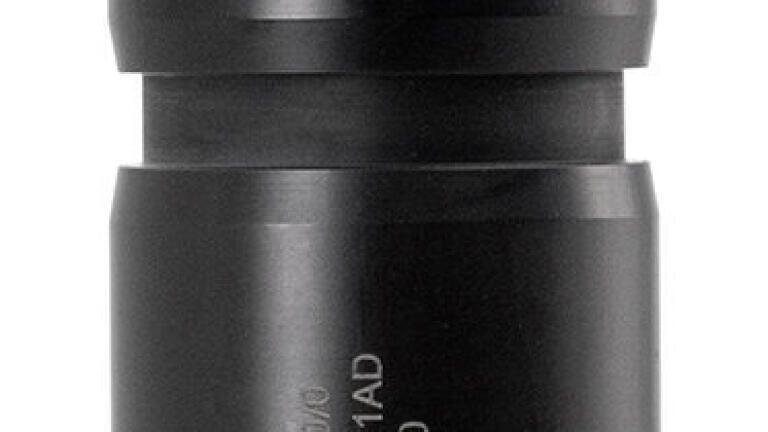
Endress+Hauser recently launched the Memosens CCS51D amperometric sensors for free chlorine measurement in process water, drinking water, water and wastewater treatment, cooling water and all utilities and processes requiring clean, treated water.
Free chlorine is the most important disinfectant in water treatment due to its easy handling, the strong disinfecting effect and the residual effect. A precise dosing control of free chlorine can only be achieved by a fast and sensitive free chlorine measurement. Memosens CCS51D features a special membrane design providing an extremely fast response time. It helps plant operators run their disinfection processes on tight limits and save on chemicals.
The sensor's convex membrane made of dense, dirt-repellent material prevents soiling and makes it extremely resistant to biofouling. Ultrasonic welding of the membrane to the sensor cap ensures its integrity, preventing dilution of the electrolyte and thus a drift of the measuring signal. This guarantees long-term stable measurements and gives water plant managers the security that the disinfection process is running smoothly, and the required disinfection results are achieved.
The free chlorine sensor is equipped with proven Memosens technology. Memosens allows for direct commissioning of new sensors without further calibration. During on-going operation, plant operators can pre-calibrate sensors in the lab, swap them into the process with plug & play, and thus continue measuring faster. Finally, non-contact data transmission eliminates all measurement errors or even failures caused by humidity or corrosion.
The disinfection effectivity of free chlorine is strongly dependent on the pH value. To compensate for this dependency, it is important to integrate a pH measurement into all disinfection processes with free chlorine. Memosens CCS51D is connected to the Liquiline multiparameter transmitter that can serve up to eight sensors simultaneously, and the Flowfit CCA250 flow assembly offers mounting space for a simple installation of the additional pH sensor.
IET Guide 2026

 Product directory