Water/wastewater
Published over 15 years ago. See the latest and most current information on Water/wastewater.
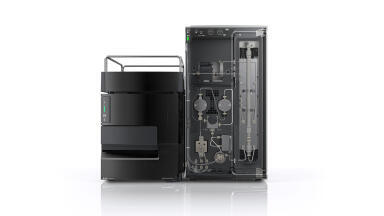
Anatune (UK) has announced a part-per-trillion upgrade to their successful VOC Analyser. This instrument uses static headspace extraction with gas chromatography-mass spectrometry (HS-GC/MS) for the determination of volatile organic compounds (VOCs) in drinking water and waste water.
Until now, analysis in the concentration range 1 to 100 μg/L was the norm but Anatune’s upgraded VOC Analyser makes it possible to carry out measurements at sub μg/L levels (i.e. parts per trillion). The system performs well for gases such as dichlorofluoromethane and vinyl chloride, through efficiently trapping these compounds at the head of the column by cryo-focusing.
The upgrade uses a GERSTEL CryoTrapSystem (CTS 2) to improve headspace method sensitivity by refocusing the headspace extract. By so doing, it is possible to improve sensitivity without loss of peak shape.
Limits of detection are in the order of 0.01 μg/L (10 parts per trillion) for most compounds, including some "problem" compounds such as oxygenates. This capability can be delivered as part of a complete Rapid Results Solution, or can be bought as an upgrade to an existing Anatune VOC Analyser.
IET 36.5 Sept/Oct 2026

 Product directory