Water/wastewater
Published over 12 years ago. See the latest and most current information on Water/wastewater.
Odours are very distinct air contaminants as they generate nuisances. The factors playing a role in the determination of odour annoyance are: odour concentration and intensity, frequency, appreciation, duration, synergy and location. Chromatotec (France) proposes an automated solution to accurately identify the origin and the level of odours.
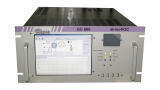
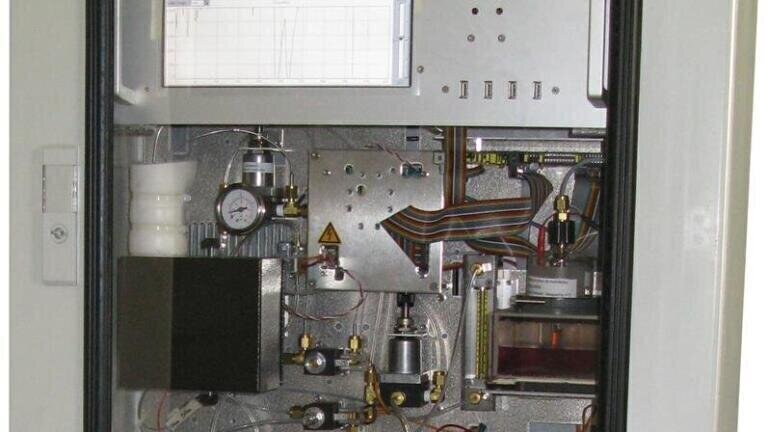
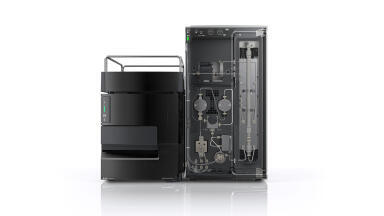
With more than 20 years experience of odour measurement in waste water treatment plants, Chromatotech offer a comprehensive solution for odour monitoring, including the Medor Gas chromatograph, specific for sulphur compounds (H2S/ MM/EM/DES/DMS/ DMDS/PM/SO2), according to ISO6326/2 & DIN51855/7, ASTM D 7493-08 with a low detection limit < 1ppb for H2S, Mercaptans and Sulphides. The Medor is interference free and has a detector lifetime of up to 10 years.
The instrument monitors ambient odours inside and outside waste water treatment plant and also monitors the deodourisation process. One instrument, using a multi stream selector, is able to measure compound concentrations and odour indexes before and after deodourisation tower. These measurements allow the control and the adjustment of deodourisation processes, the optimisation of chemical treatment and a decrease in effective costs.
As the replacement of calibration gas cylinders is expensive and time consuming, Chromatotec is developing electrochemical gas generators (e.g. H2S, Cl2, O2, H2…). These generators will allow high level calibration and improve the reliability of the system.
Chromatotech also offers the chromaTID gas chromatograph specific for amines and ammonia, and the DET NH3 FTUV detector for ammonia. Features include internal auto calibration to automatically validate the data, with optional data reporting and modeling software, real-time odour dispersion modeling, online registration of complaints, and recalculation of odour concentration at a specific location and time.
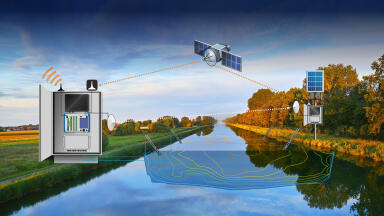
Meteorological stations are also available to monitor wind direction and speed, temperature, and relative humidity.
IET 36.5 Sept/Oct 2026


 Product directory


















.jpg)