Water/wastewater
Published over 17 years ago. See the latest and most current information on Water/wastewater.
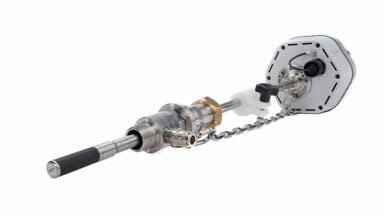
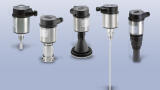
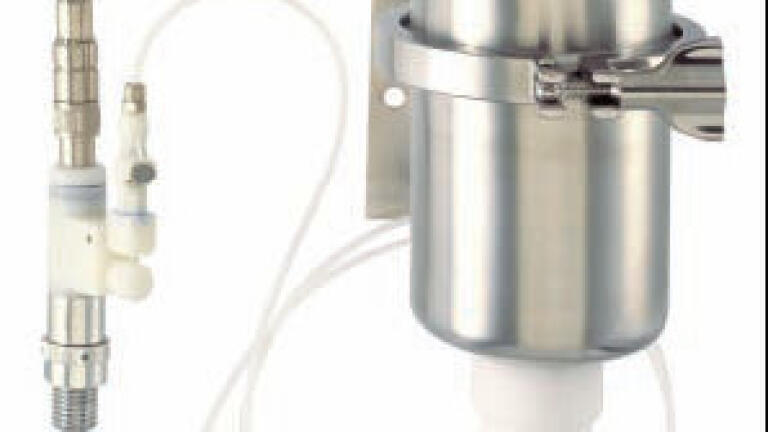
In the course of its continuous development of components tailored to the requirements of the market, Bürkert (Germany) has now expanded its range of sensors. An innovative, absolute measuring pH electrode is setting new standards in terms of robustness and sterile design. In contrast to conventional solutions, the electrode is not made of glass, but rather of an enameled steel tube that is extremely insensitive to mechanical stresses. Additional benefits: It is durable, maintenance-free and can be cleaned and sterilized without having to be removed.
The requirements placed on pH measurement systems are increasing in food, beverage, pharmaceuticals and chemical applications as well as in water and effluent treatment. In particular, germ formation and migration caused by gaps, corners, dead spaces and dead volumes must be avoided completely. Another requirement: It should be possible to clean the devices in all applications without having to remove them – generally with steam or acidic/alkaline cleaning solutions. Furthermore, sensors and valves only have a chance in these types of application if
they feature the following properties: sterile and robust design, high measuring accuracy over an unusually long period of time, high temperature and pressure resistance, and CIP (clean-in-place) compatibility. Although conventional glass electrodes may meet all the hygiene requirements with ease, their major drawback is that they cannot be cleaned in place. Which means that they have to be removed from the pipelines using a change fixture before they can be cleaned (they also have to be removed while the pipelines are being cleaned). They are then cleaned separately with chemicals in the change fixture and may also have to be calibrated. The risk during this procedure is that opening the process pipelines allows the ingress of germs and impurities into the process. On the other hand, the innovative pH probe from Bürkert can be sterilized “in line”, meaning that it does not have to be taken out of the pipeline during a CIP cycle. Customers all over the world now appreciate the fact that these components eliminate their reliance on (automatic) change fixture.
IET Guide 2026

 Product directory